The Best Cat Nail Clippers (2026)
Cat nail clippers from Necoichi, Shiny Pet and Safari, compared on why thin blades matter on a claw and how to trim a cat that will not sit still.
Cat claws are easier to trim than dog nails and far harder to get permission for. The claw itself is thin, pale and usually shows its quick clearly. The difficulty is entirely the cat, which is why the tools that win here are the ones that need the least time and the least grip.
Thin blades are the whole trick
A cat claw is a fraction of the thickness of a dog nail, so cutting power is irrelevant and visibility is everything. Thick jaws sit over the claw and hide exactly the part you are trying to judge. The Necoichi’s unusually thin blades are the clearest example of the principle, and it is why it costs what it does.
Angled blades matter for the same reason. A claw is a hook, and a blade set at an angle meets it along its curve rather than across it, which means less repositioning of a paw the cat is already trying to withdraw.
Two claws is a complete session
The most useful habit in cat grooming is stopping early. A cat that gets two claws done while half asleep and is then left alone learns that this is a minor event. A cat held down for all eighteen learns the opposite, and that lesson lasts years.
Work through the paws over a week. Extend the claw by pressing gently top and bottom on the toe, take the clear hook off in front of the pink, and let go before the cat decides to. Keep styptic powder nearby, and if you catch the quick, stop for the day rather than pushing on.
Do not forget the dew claw
The dew claw sits up the inside of the front leg and never touches the ground, so it wears down for no cat, indoor or outdoor. It is the claw that curls round into the pad, and by the time a cat is limping it needs a vet rather than a clipper. Check it every time you check the others, particularly on an older cat that has stopped using the scratching post much.
Trimming never removes the need to scratch. It blunts the damage a cat does while doing something entirely normal.
For dogs, use a dog tool
A cat clipper cannot cope with a Labrador’s nails, and the reverse is worse. Our best dog nail clippers roundup covers the scissor and guillotine options that are sized for that job, and our best dog nail grinders guide covers the quieter, slower alternative for dogs that have already had one bad experience.
The honorable mentions list is empty deliberately. A Hertzko clipper we checked sits at 3.3 stars, and a Resco cat trimmer had only 42 reviews, below our floor. Neither belongs on a page next to the five above.
How we test
Every pick is scored on the same five criteria and cross-checked against real owner feedback - so the ranking reflects how a product holds up after six months in a real house with a real animal, not its spec sheet.
Build
Materials and construction: pump and motor quality, whether plastics are food safe, and how well the thing is actually put together.
Cleaning
How much work it is to keep hygienic. Dishwasher-safe parts, how many pieces it breaks into, and whether biofilm can hide in a corner you cannot reach.
Durability
Whether it survives months of daily use, chewing, scratching and repeated washing without the motor dying or the seals failing.
Pet fit
Whether animals will actually use it: size range, whisker clearance, height, and how the design suits nervous or senior pets.
Value
What you get for the price, including the running cost of filters, liners and other consumables it locks you into.
Best overall
Necoichi Purrcision Feline Nail Clipper
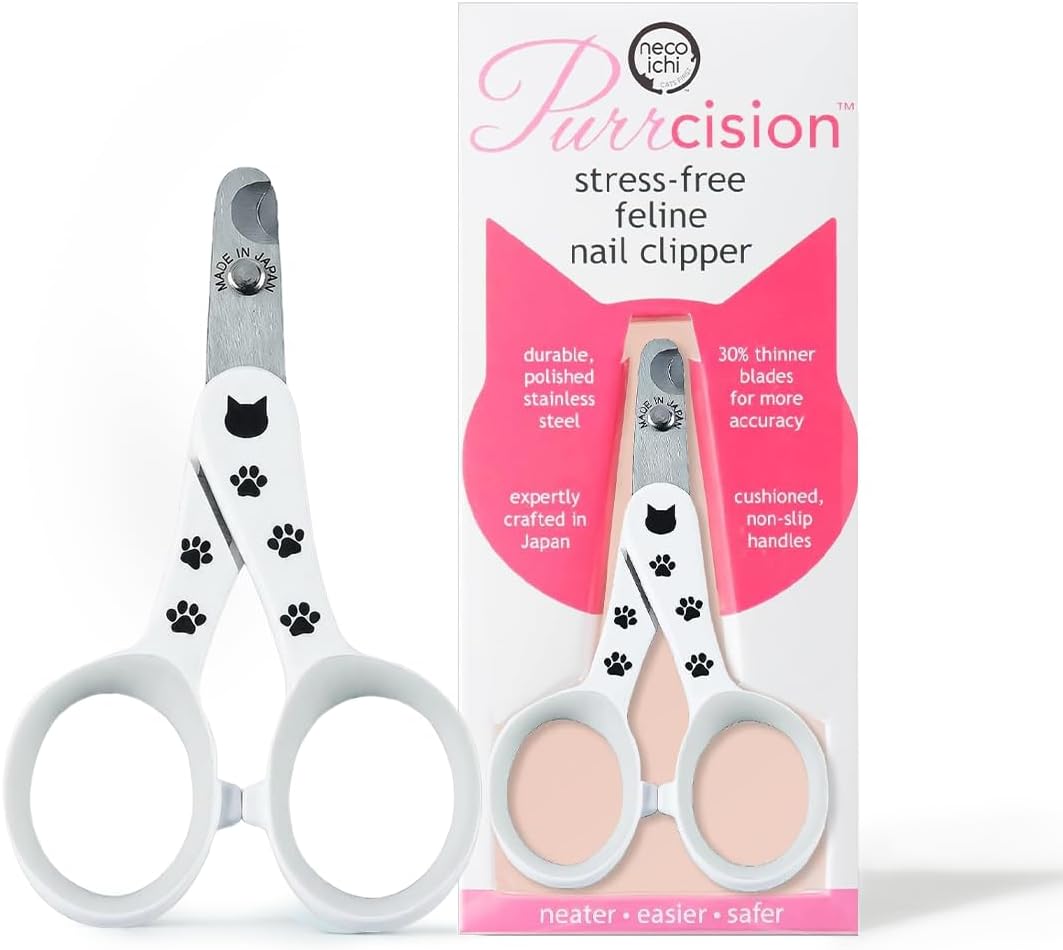
At 4.8 stars this is the highest-rated product anywhere on this site, and it earns it with one design decision: the blades are about 30 percent thinner than typical clippers, so they take up less room around the claw and you can actually see the pink quick as you line up the cut. On an animal where the whole difficulty is visibility, that is worth more than any other feature. The steel comes from Seki in Japan, a knife-making city, and it is sharp enough that a claw parts with no crunch and no pull, which is what stops a cat flinching mid-cut. The cushioned handles use a lever action that needs very little grip strength. It costs several times what a basic clipper does, and for a cat that is easy about its feet that is more clipper than you need.
Pros
- Thin blades leave the quick visible while you position the cut
- Seki steel, sharp enough that claws part without a crunch
- Lever action needs very little grip strength
- Highest rated product we have tested in any category
Cons
- Several times the price of a basic clipper
- Overspecified for a placid cat that never objects
Best value
Shiny Pet Nail Clippers for Cats and Small Animals
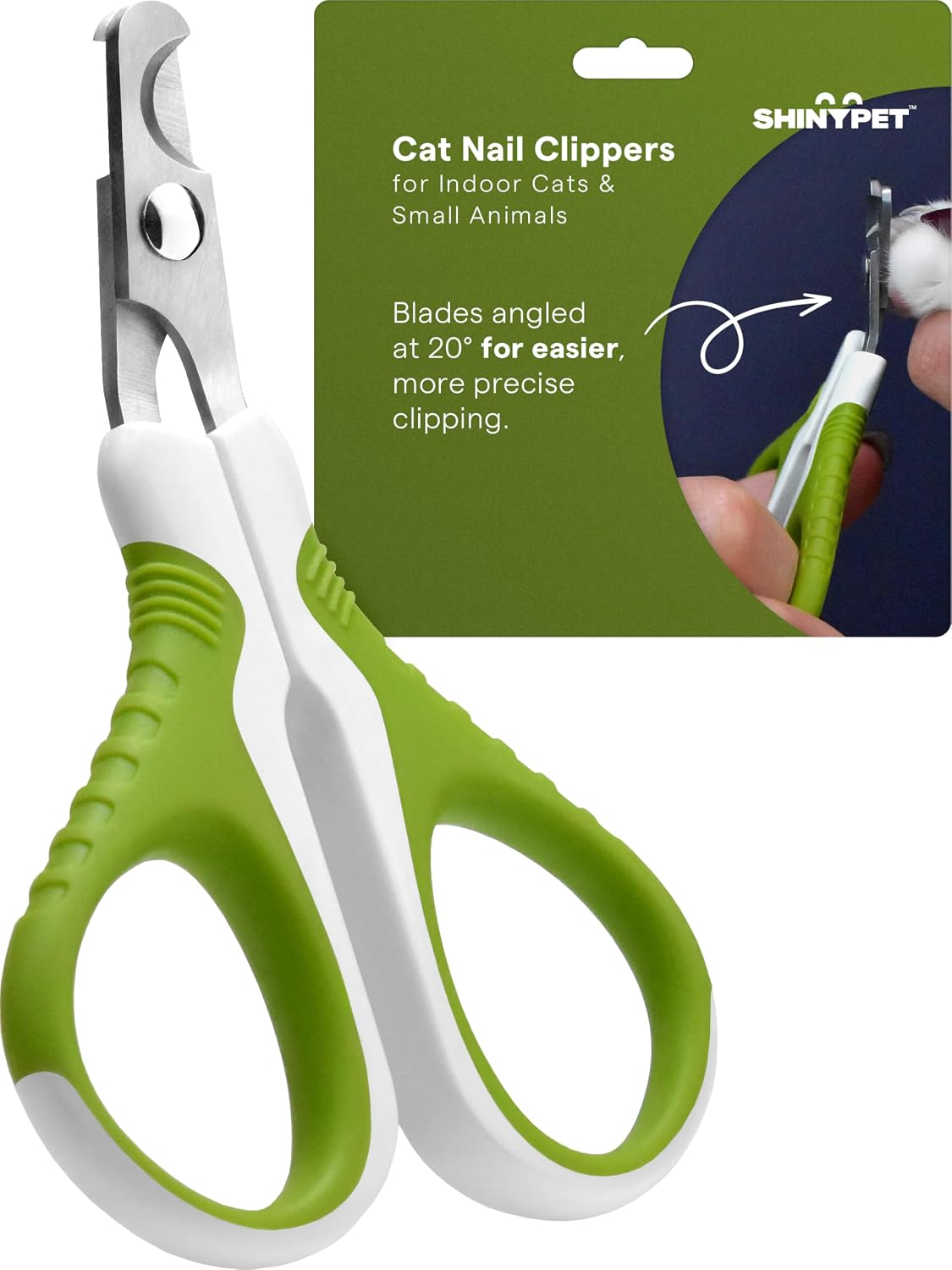
These are the scissor-style clippers most people should start with. The blades are angled rather than straight, which sounds trivial and is the reason they work: the angle matches the curve of a claw, so the tip sits naturally in the jaws instead of needing you to twist your wrist. At a fraction of the Necoichi's price with more than twenty thousand reviews at 4.6 stars, this is the low-risk way to find out whether home trimming suits you and your cat. They are small enough for kittens, rabbits and birds too. The steel is good rather than exceptional, so expect to replace them after a couple of years rather than passing them down, and the handles are plain plastic without cushioning.
Pros
- Angled blades match the curve of a claw, so positioning is natural
- Small enough for kittens, rabbits and birds as well as adult cats
- Very large review base at a strong rating
- Cheap enough to keep a spare pair downstairs
Cons
- Steel is good rather than exceptional; a two year tool
- Plain uncushioned handles
Best guillotine
Coastal Pet Safari Cat Nail Trimmer
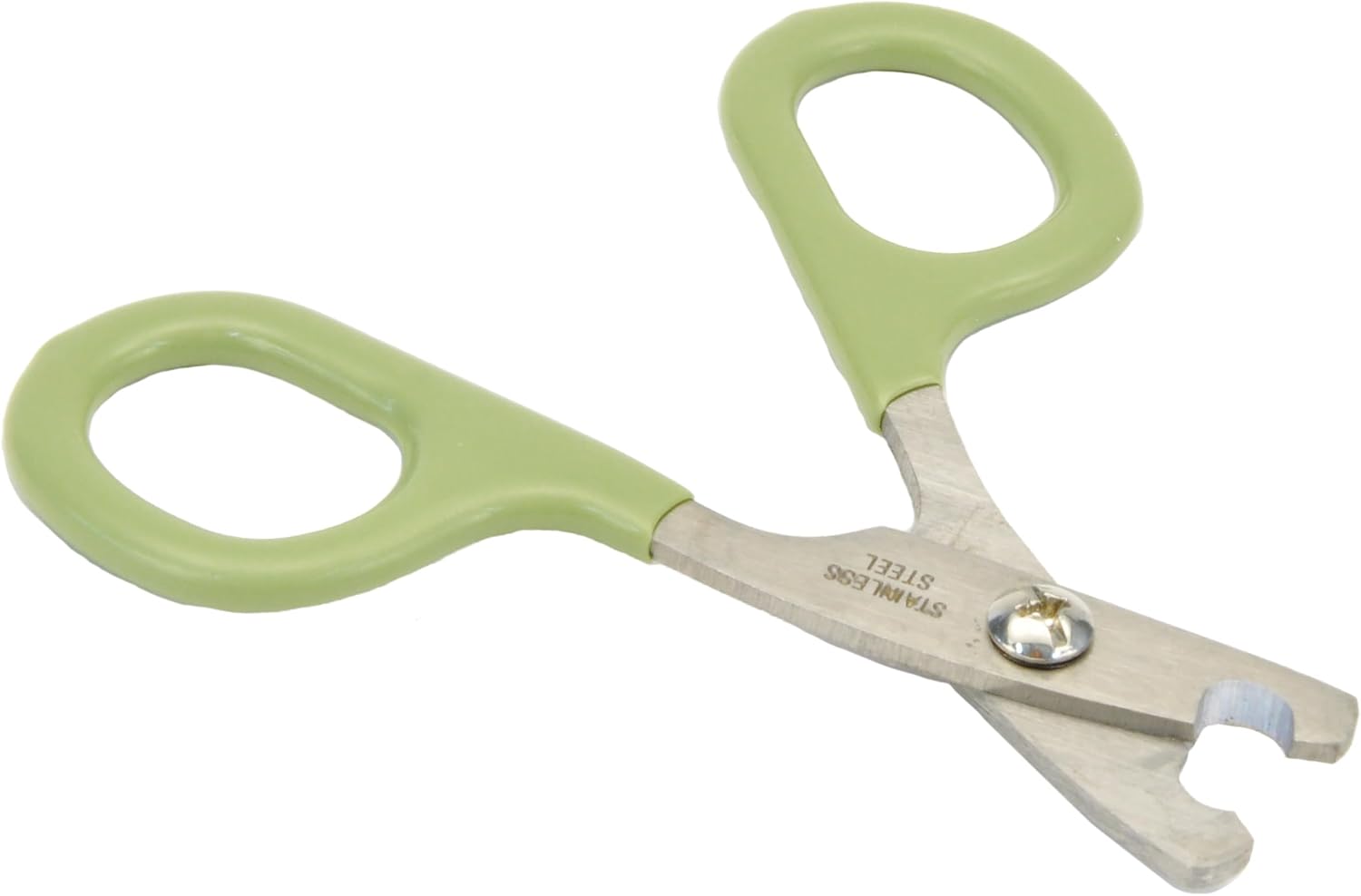
A double guillotine design that takes the tip off in a single snip, and the pick for anyone who finds scissors fiddly on a wriggling cat. Because the claw is held in the aperture, the cut lands where you put it even if the cat moves a little, which is a real advantage on an animal that never stays still for long. It works left or right handed. The trade-offs are the ones every guillotine has: you see less of the claw than with the thin-bladed Necoichi, and the blade dulls with use and is not sharpenable. Its review base is the smallest here at a couple of hundred, though the rating is strong and the buy box was the cleanest we confirmed all week.
Pros
- Single snip, so a small movement mid-cut matters less
- Works equally well left or right handed
- The cut lands exactly where the aperture is placed
- Cheapest pick here
Cons
- Less visibility of the quick than thin scissor blades
- Blade dulls with use and cannot be sharpened
Best for kittens and small pets
Pet Republique Cat Nail Clippers
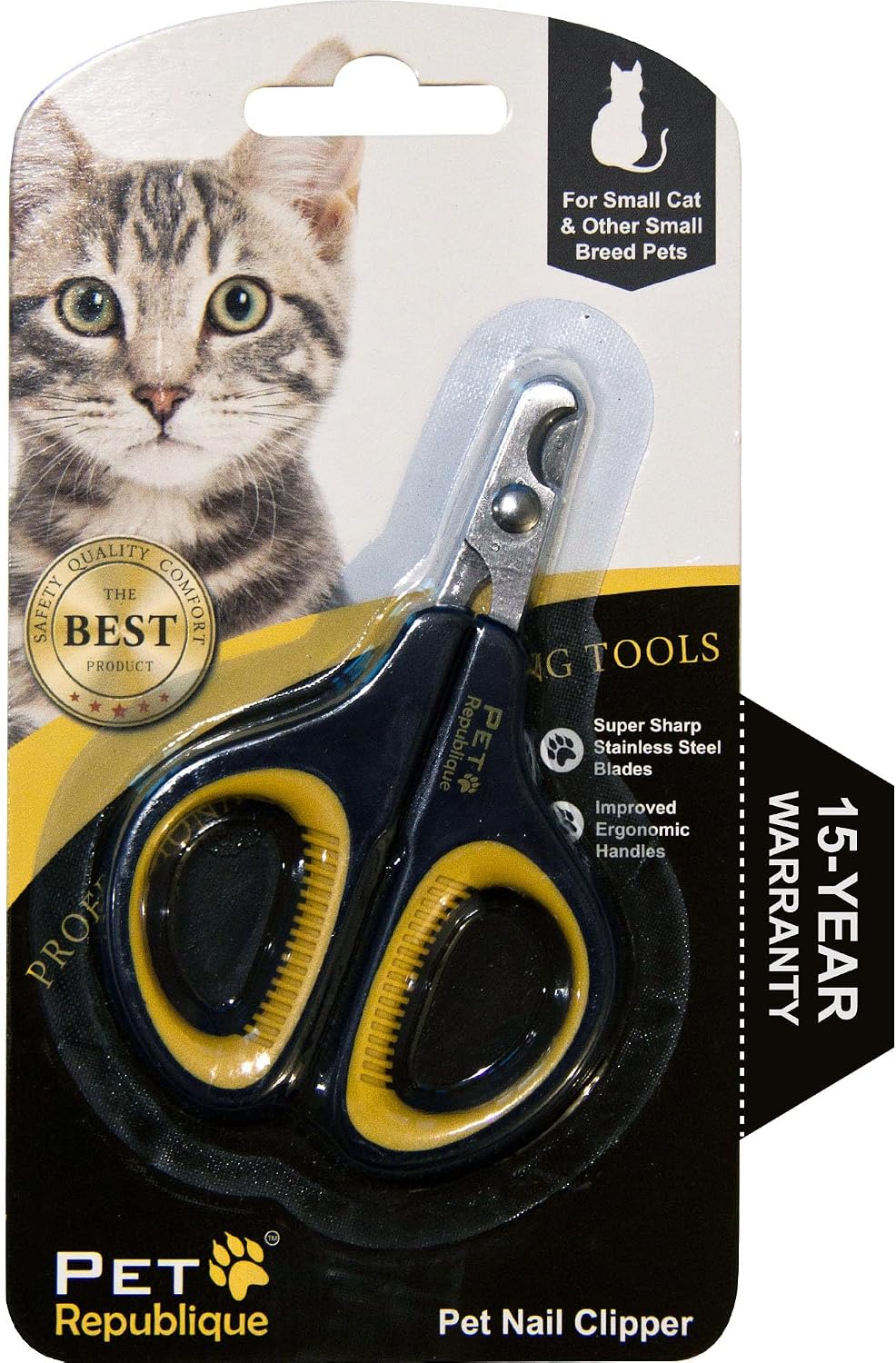
Sized properly for the smallest claws, which sounds obvious and is the thing most clippers get wrong. The jaws are short and the blades thick enough not to flex on a kitten's paper-thin claw, where a larger clipper tends to bend the claw before cutting it. That makes this the pick for kittens, rabbits, birds and elderly cats with brittle claws. A built-in spring reopens the handles so you are not fighting the tool one-handed while holding a wriggling animal. With more than thirty-two thousand reviews at 4.6 stars it is well proven, and a portion of profits goes to animal shelters. The handles are moulded plastic rather than cushioned, and it is too small to be comfortable on a large adult cat's front claws.
Pros
- Correctly sized for kittens, rabbits and birds, where most clippers are not
- Blades thick enough not to flex on a thin claw
- Sprung handles, easy to work one-handed
- Very large review base at a strong rating
Cons
- Too small to be comfortable on a large adult cat
- Plain moulded handles without cushioning
Best grip
JW Pet GripSoft Nail Trimmer, Small
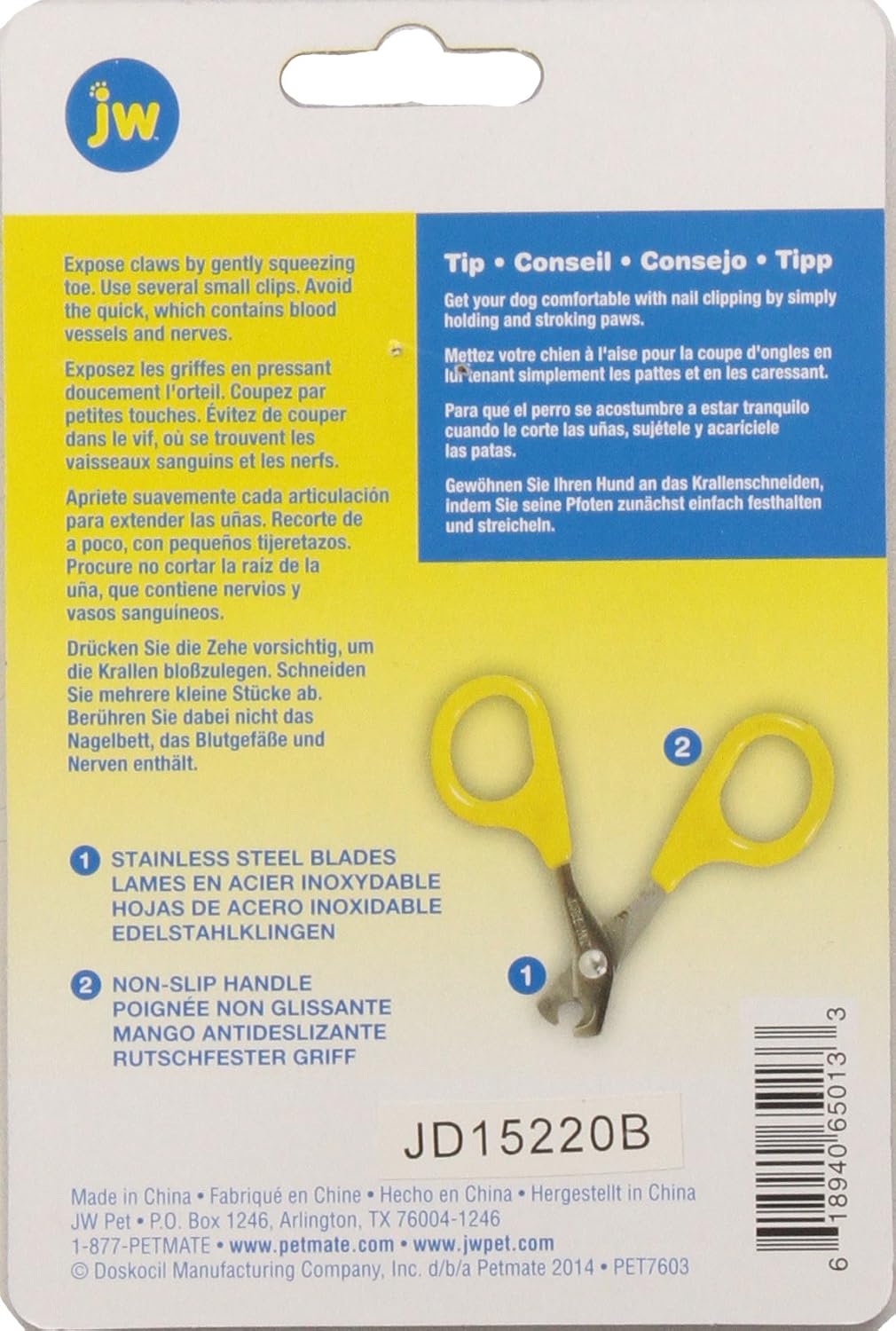
The GripSoft handle is the best on this page for a hand that struggles with grip strength, which makes this the pick for arthritic hands or anyone who finds small clippers fiddly to control. It is a scissor action sized for cats and small dogs, with a non-slip moulded grip that stays put when your hands are damp. At 4.4 stars across a couple of hundred reviews it is well regarded on a modest base. Two caveats worth stating: the blades dull faster than the Necoichi's Seki steel and cannot be sharpened, and we could not confirm its buy box on the day we checked, so verify availability before ordering.
Pros
- The most comfortable handle here for a weak or arthritic grip
- Non-slip even with damp hands
- Correctly sized for cats and small dogs
- Inexpensive
Cons
- Blades dull faster than the Necoichi and cannot be sharpened
- Buy box could not be confirmed at the time of writing
Frequently asked questions
Can I use dog clippers on a cat?
You can, and you should not. A cat claw is thin, sharply curved and retractable, and a dog-sized jaw is too big to position accurately on one. The practical result is that you cannot see what you are cutting, which is precisely when people catch the quick. Cat clippers are small, angled and thin bladed so the claw sits where you can see it.
Where is the quick on a cat?
Easier to find than on a dog, because most cat claws are pale enough that the pink triangle is visible when you extend the claw. Press gently on the top and bottom of the toe to push the claw out, look for the pink wedge, and cut the clear hook a couple of millimetres in front of it. Only the sharp tip needs to come off. If the claw is dark, take a sliver at a time.
My cat will not sit still. What now?
Do not try to do all eighteen at once. Two claws while the cat is dozing on your lap, then stop, is a better long-term strategy than one wrestling match. Many cats are far easier when approached from behind while sitting on your knee rather than being held down. If your cat becomes genuinely distressed, a groomer or vet nurse can do it in a minute, and that is a reasonable thing to pay for rather than damage the relationship over.
Do indoor cats need their claws trimmed?
Usually yes. Outdoor cats wear claws down naturally; indoor cats often do not, and an overgrown claw can curve round far enough to grow into the pad, which is painful and needs a vet. Older cats are most at risk because they stop using a scratching post as much. Check the front claws every couple of weeks, and check the dew claw, which never touches the ground and is the one that grows into the pad.
What about the back claws?
Most cats need the front claws done and rarely the back ones, which stay shorter through normal use. Trimming claws never removes a cat's need to scratch, so a clipper is not a substitute for a scratching post. Declawing is an amputation of the last bone of each toe and is opposed by the major veterinary bodies; it is not a grooming option.