Litter-Robot 4 Troubleshooting: What Each Light Means
Match the light bar to the fault, then fix it. Drawer full, false cat detects, stuck cycles and a wrong waste gauge, with the official steps for each.
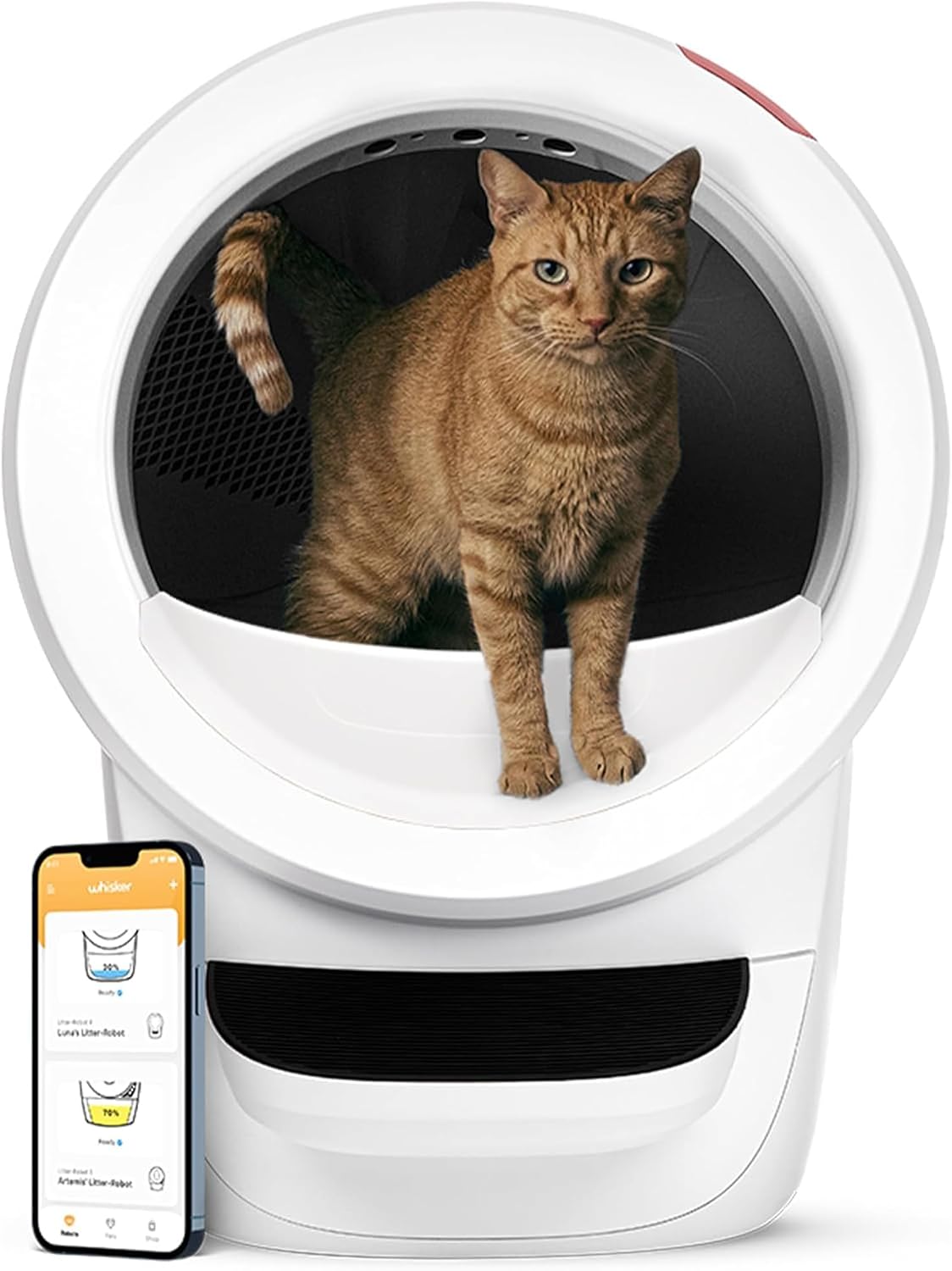
The Litter-Robot 4 tells you what is wrong before you touch it. The light bar is the diagnosis, and most of what gets described online as a broken machine is one of four patterns with a documented fix.
So match the light first. Everything below comes from Whisker’s own support documentation.
Match your light
Flashing blue. The waste drawer is full. Empty it, press Reset, then Cycle.
Blue with two flashing yellow lights. The scale has been triggered for more than thirty minutes, which usually means weight it cannot account for. Take out litter sitting above the fill line, make sure the unit is not on carpet, a litter mat, a power cord, a grout line or touching a wall, then press Reset twice from the Home position to zero the scale.
Alternating red and blue. The three laser Curtain Sensors need cleaning. This is the one people read as a dead cat sensor, and it is almost always dust.
Solid red. A cat is detected inside. The unit cycles when the countdown ends. The default delay is seven minutes and can be set between three and thirty.
Solid purple. Sleep Mode. Long press Cycle for three seconds to turn it off.
Flashing yellow. The bonnet is off. It resumes five seconds after you put it back.
Solid yellow. Paused. Press Cycle or Reset to resume.
The two fixes that solve most faults
Clean the three laser sensors. They sit in the top of the bezel and measure both the drawer level and whether a cat is inside, which is why dust on them produces two apparently unrelated symptoms: a drawer gauge that lies, and false cat detects that stop the machine cycling. Wipe the bezel sensor area with a dry cloth, then vacuum the inside edge of the bezel with a brush attachment, passing over the holes along the top. A cotton swab helps on the sensors themselves.
Check how it is standing. The Litter-Robot weighs your cat, so anything that disturbs the scale reads as a fault. It needs a firm, level surface with all four feet moving freely and none resting on a cord, a grout line or a stray clump of litter. Any mat goes fully in front of the unit rather than partly underneath, and the sides want clearing of walls. On carpet, weight accuracy suffers; Whisker sell a carpet tray for exactly that.
Those two checks cover the large majority of reported faults, and both are free.
If it is stuck mid-cycle
Long press Reset for three seconds to zero the weight scale. That is the documented recovery, and it is also worth doing after you move the unit or change the litter depth.
When it is not something you can fix
Some patterns are hardware, and no amount of cleaning helps. Alternating red and green means the factory scale calibration is lost and the base needs replacing. Alternating blue and white is a motor connection problem. Three solid with two flashing in white and blue points at a defective power supply.
In those cases, contact Whisker and give them the exact pattern, including whether lights are solid or flashing and how many. The pattern is what determines the fix, and describing it precisely is the difference between a replacement part arriving and a week of back and forth.
Put a tray down while it is out of action
This is the part the troubleshooting pages leave out, and it matters more than the repair.
A cat that finds its box unusable will choose somewhere else, and that choice can outlast the fault by weeks. The moment the machine is down, put an ordinary litter tray in the same room, even if you expect the fix to take ten minutes. It costs nothing and it protects the habit.
If your cat does start going outside the box, or you see straining or blood, that is a vet question rather than a machine question, and in a male cat straining with little or no urine it is an urgent one.
Worth knowing before the next fault
Nearly everything above is dust. Wiping the sensors every couple of weeks is the single maintenance habit that prevents most of this category’s support traffic, and it applies to every automatic box, not only this one. Our best self cleaning litter boxes roundup makes the same point about the machines we rank, and our Litter-Robot 4 review covers how the machine behaves over the long run, including what it costs to keep running against the three year arithmetic for the category.
If the real problem is that your cat has never settled with the machine, that is a different fix. Our guide to introducing a cat to a self cleaning litter box covers the sequence that works.
Frequently asked questions
What does a flashing blue light mean?
The waste drawer is full. Empty it, press Reset, then press Cycle. Whisker note that the unit will cycle twice more after that warning before it stops cycling automatically, so it is worth doing promptly rather than leaving it until the evening.
Why does it say the drawer is full when it is not?
Three laser sensors in the top of the bezel measure the drawer level, and dust or cat fur on them distorts the reading. A waste bag that is stretched or not pressed flat does the same thing. Clean the bezel and sensors first, reseat the bag, and if it still misreads, Whisker's waste drawer calibration is the next step, which needs firmware 1175.5021.289 or newer.
Why does it think a cat is inside when the globe is empty?
Alternating red and blue means the Curtain Sensors need cleaning. Those are the same three lasers, and when they are dusty they cause false cat detects as well as a wrong drawer gauge. Wipe the bezel sensor area with a dry cloth and vacuum the inside edge of the bezel with a brush attachment, passing over the holes along the top.
It stopped cycling overnight. Is it broken?
Probably not. A solid purple light bar means Sleep Mode, which defaults to eight hours and repeats every twenty four. The unit does not run a clean cycle while asleep, though it will clean after waking if it detected a visit. A three second long press of the Cycle button turns Sleep Mode off, and you can also change it in the Whisker app under Controls.