The Best Dog Seat Belts and Car Restraints (2026)
Dog car restraints compared on hardware, attachment and adjustment, plus the honest truth about what a tether does and does not do in a crash.
A loose dog in a car is a hazard to the people in it before it is a hazard to itself. It can reach the pedals, block a mirror, or end up in the driver’s lap at exactly the wrong moment, and that is the problem a restraint actually solves.
What we scored
Build, cleaning, durability, pet fit and value. Build and durability dominate here, because a restraint is mostly hardware, and hardware is where cheap products are cheap: plated clips round off, stitching lets go at the bar tack, and a tether that has been chewed halfway through looks fine until the day it matters.
The claim to be sceptical of
Very few dog car restraints are independently crash tested, and plenty of listings imply protection they cannot evidence. The Center for Pet Safety has certified only a small number of products over the years, and none of the tethers here are sold on that basis.
That does not make them pointless. A tether reliably stops a dog roaming the cabin, reaching the footwell or leaving through an opened door, and those are the everyday risks. It is honest containment, not a canine seat belt in the sense that a human’s is, and anyone selling it as the latter is overselling.
Attach to a harness, never a collar
This is the one non-negotiable. A tether clipped to a collar puts every bit of force through the dog’s neck in a stop hard enough to matter.
Every restraint here is designed to clip to a harness, and if your dog does not have one, that is the first purchase rather than the second. Our best no pull dog harnesses roundup covers harnesses with a sturdy back ring suitable for this, and how to measure a dog for a harness covers getting the fit right, which matters more here than on a walk.
Getting the length right
The dog should be able to sit and lie down, and should not be able to put its front paws in the footwell or stand fully upright. Too long is genuinely worse than too short: slack lets a dog build momentum before the tether stops it.
The other half of the job
A restraint keeps the dog in place. It does nothing about hair, mud or claw marks on your upholstery, which is the reason most people end up buying a cover as well. Our best dog car seat covers roundup covers those, including the hammock designs that also make it physically harder for a dog to reach the footwell.
How we test
Every pick is scored on the same five criteria and cross-checked against real owner feedback - so the ranking reflects how a product holds up after six months in a real house with a real animal, not its spec sheet.
Build
Materials and construction: pump and motor quality, whether plastics are food safe, and how well the thing is actually put together.
Cleaning
How much work it is to keep hygienic. Dishwasher-safe parts, how many pieces it breaks into, and whether biofilm can hide in a corner you cannot reach.
Durability
Whether it survives months of daily use, chewing, scratching and repeated washing without the motor dying or the seals failing.
Pet fit
Whether animals will actually use it: size range, whisker clearance, height, and how the design suits nervous or senior pets.
Value
What you get for the price, including the running cost of filters, liners and other consumables it locks you into.
Best overall
Leash Boss Dog Car Seat Belt Restraint
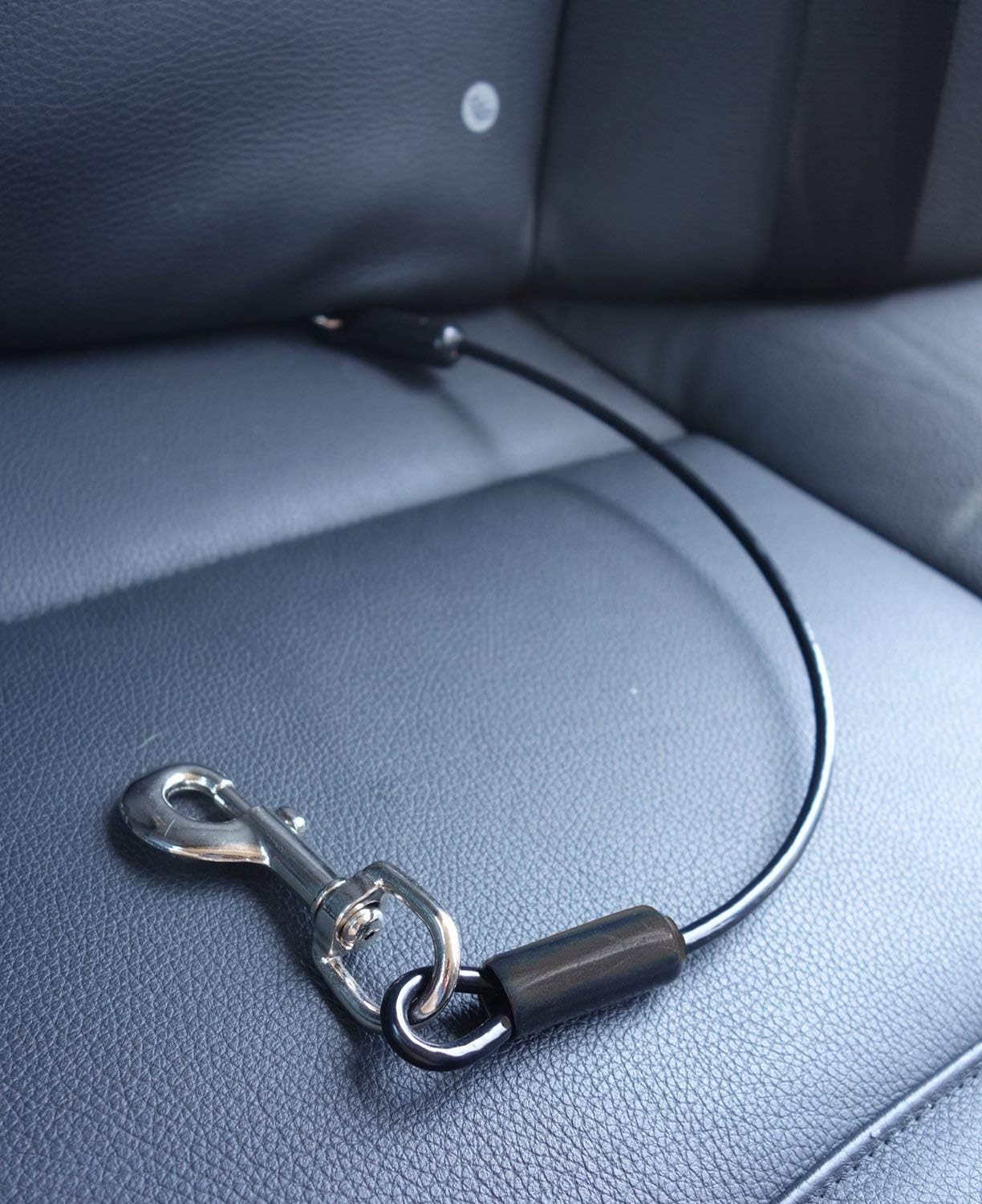
The restraint we would fit to a strong dog, and the reason is the part everyone else cheapens: the hardware. The webbing is wrapped in a chew-resistant sleeve and the clips are heavy metal rather than the plated zinc that rounds off after a season. It plugs into the seat belt receiver, adjusts over a useful range, and includes a swivel that stops the tether twisting into a shorter and shorter line as a dog turns around, which is the failure nobody anticipates until it happens.
Pros
- Chew-resistant sleeve over the webbing
- Heavy metal hardware throughout
- Swivel stops the tether twisting shorter
- Wide adjustment range
Cons
- Bulkier than a simple strap
- Buckle release is reachable by a determined paw in some cars
Best shock absorption
SlowTon Double Dog Seat Belt
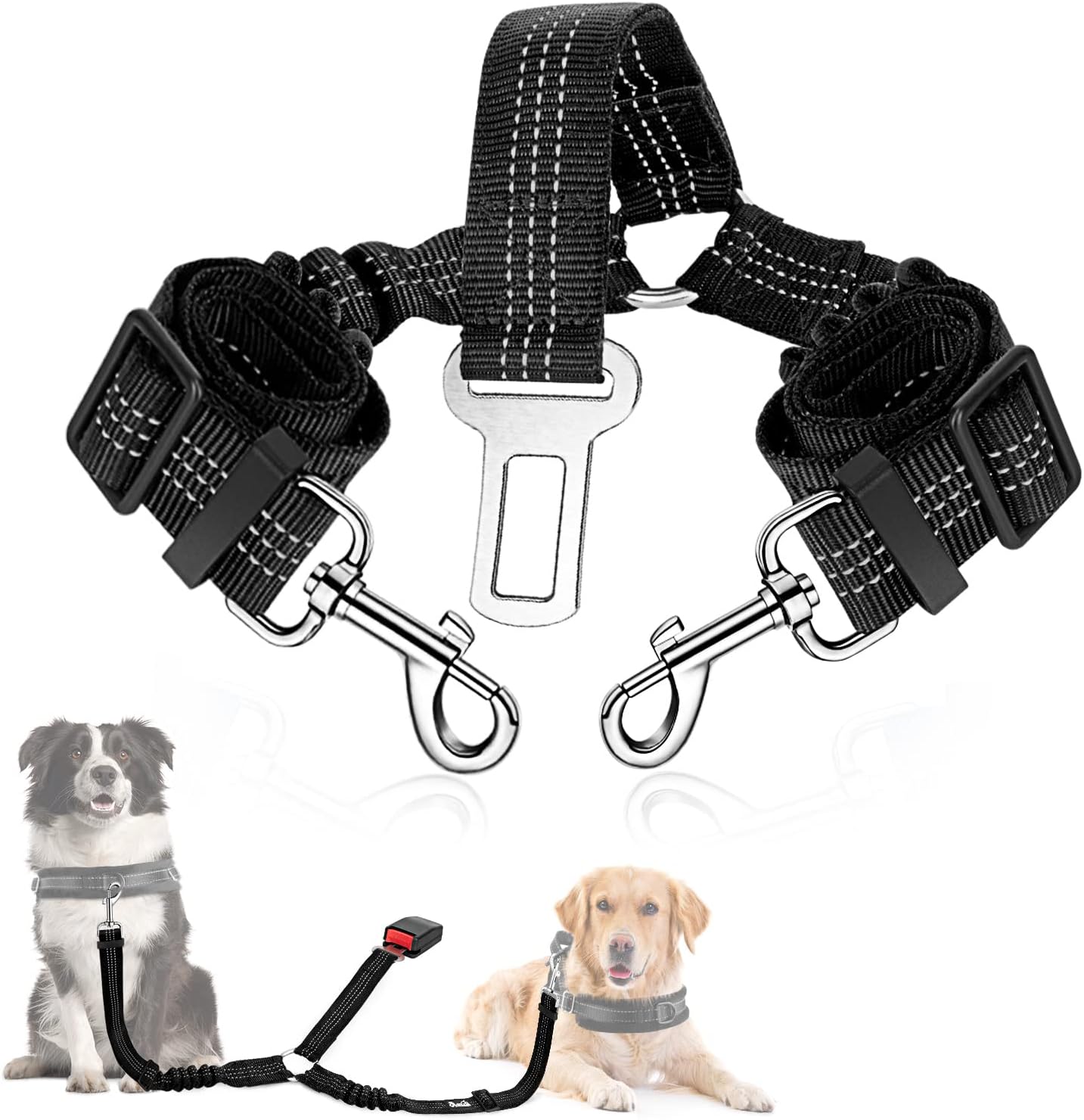
The only design here with a genuine elastic bungee section, which changes what happens in a hard stop: instead of the dog hitting the end of a static line, the stretch spreads that force over a longer moment. It is the most comfortable option for a dog that travels often. The double-clip arrangement lets you attach at two points for a dog that turns and tangles. The elastic is also the wear item, so check it for fraying every few months rather than assuming it lasts forever.
Pros
- Bungee section softens sudden stops
- Two attachment points reduce tangling
- Comfortable for long journeys
Cons
- Elastic degrades and needs periodic checking
- Stretch allows more movement than a static tether
Best headrest design
BWOGUE Dog Seat Belt
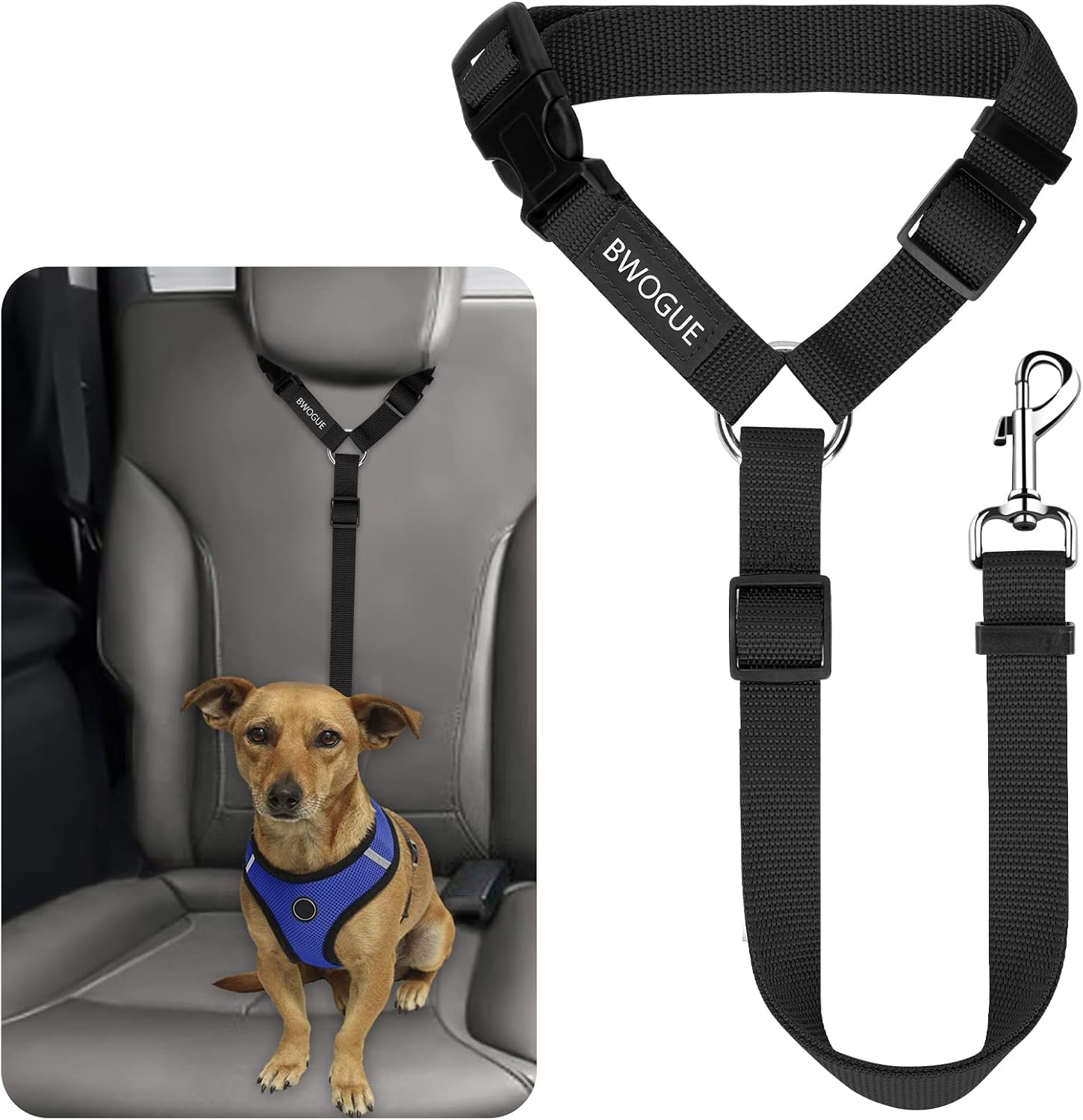
A headrest loop rather than a buckle, which makes it the one to buy for a car where the seat belt receiver is buried or already carrying a child seat. It takes seconds to fit, moves between vehicles without thought, and cannot be popped open by a paw the way a buckle can. It sits higher than a buckle restraint, so a dog has slightly more vertical freedom, which is fine for a small or calm dog and less ideal for a large one that likes to stand.
Pros
- Fits any seat with a headrest, no receiver needed
- Cannot be released by a paw
- Moves between cars in seconds
Cons
- Higher anchor gives a big dog more movement
- Not usable on seats without removable headrests
Best hardware quality
EzyDog Click Dog Seat Belt Restraint
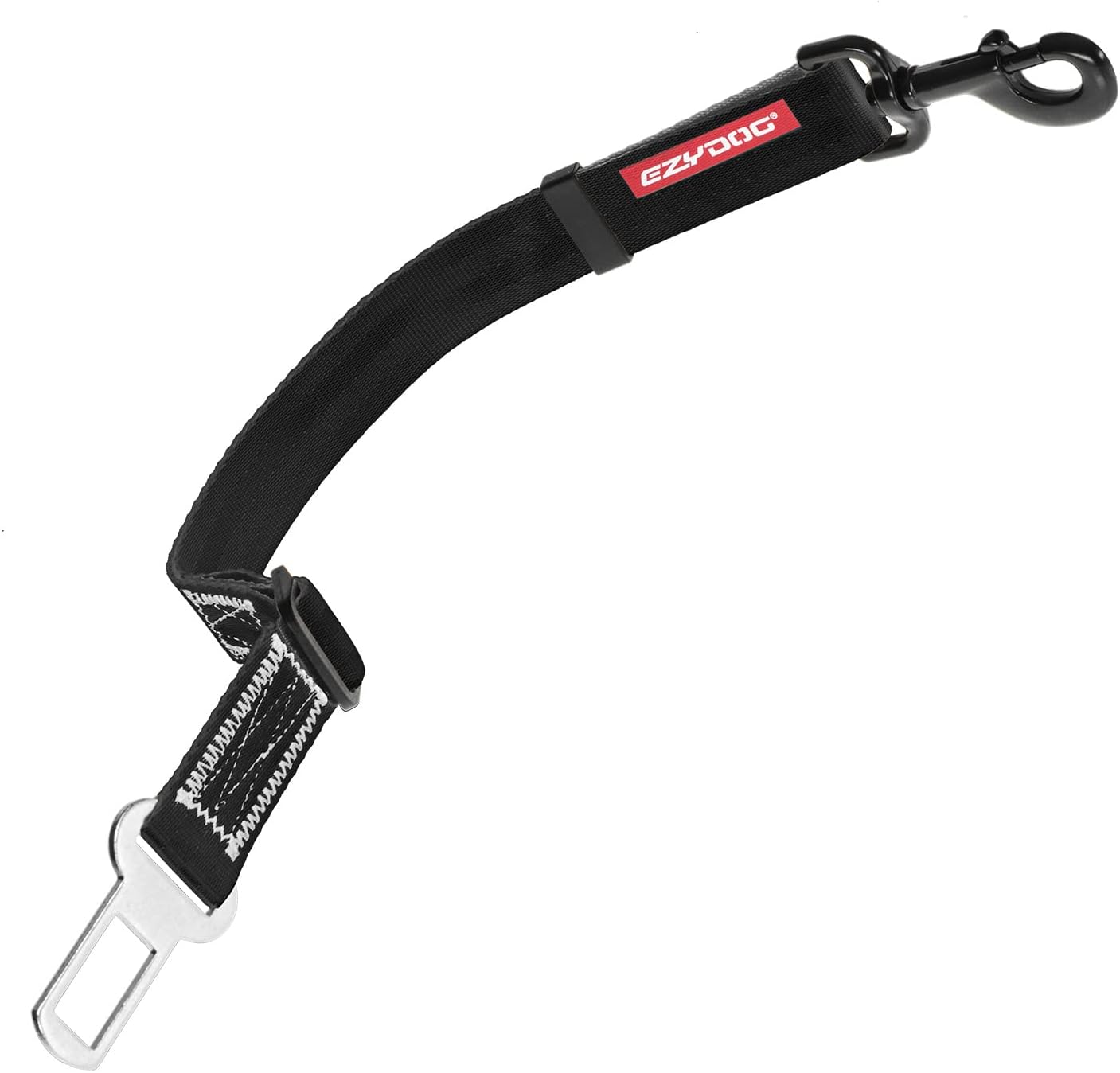
The best-made object in this roundup, from a brand that makes harnesses rather than a generic accessories seller, and it shows in the stitching and the anodised hardware. It is short by design, which is the philosophy: a restraint that keeps a dog properly on the seat rather than one that lets it move around and reach the end of a long tether at speed. That makes it the wrong choice for an anxious dog that needs to reposition, and it is the most expensive option here for the least material.
Pros
- Best build quality and stitching of any pick here
- Short tether genuinely limits movement
- Anodised hardware resists corrosion
Cons
- Most expensive for the least length
- Too restrictive for a dog that needs to shift about
Best budget pick
Lukovee Dog Seat Belt Harness
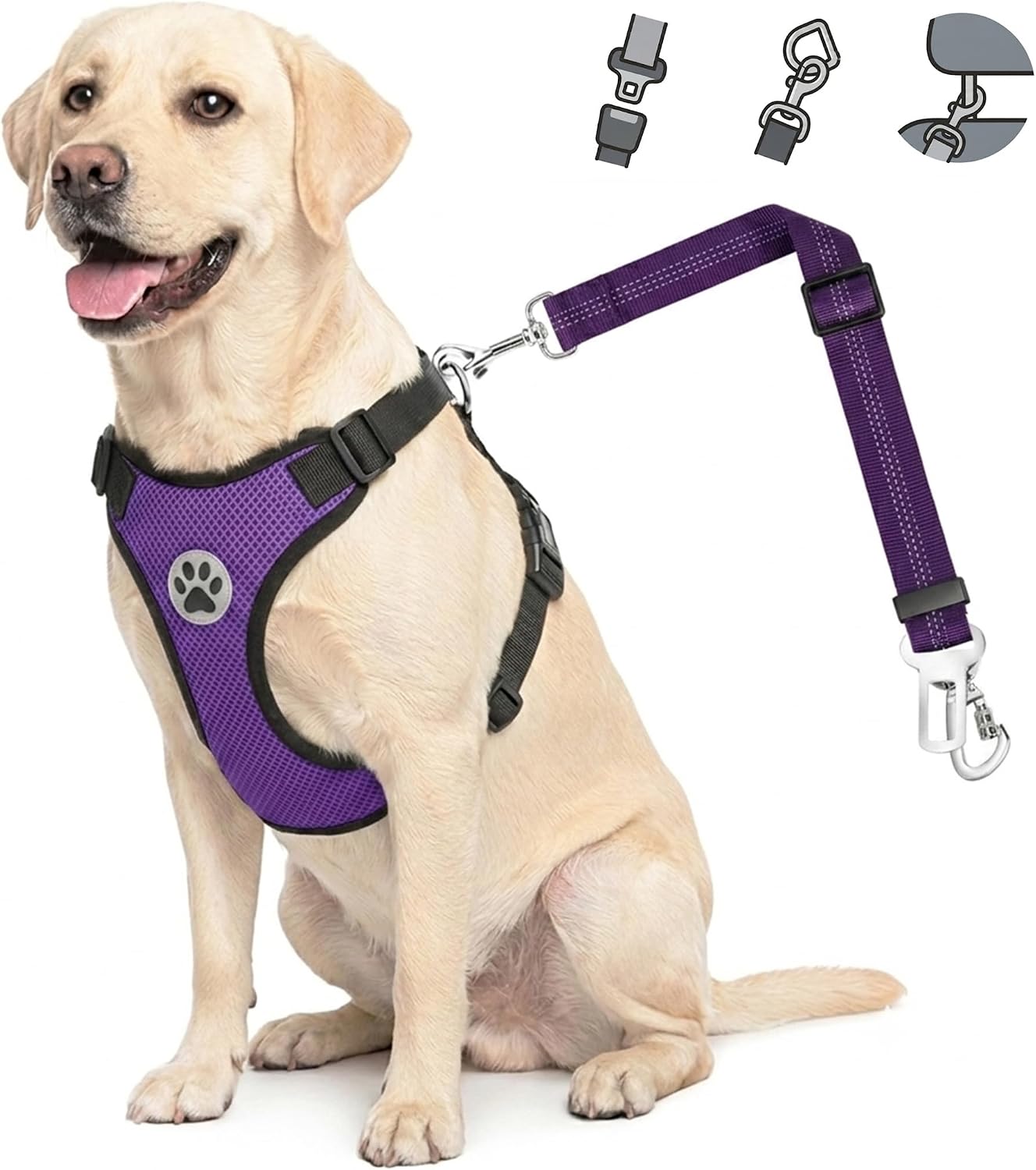
The sensible cheap option, and the one to buy if you drive the dog somewhere twice a month rather than daily. It is a double-clip nylon tether with an adjustable length and reasonable stitching, backed by a large review base. The hardware is the compromise: plated rather than solid metal, so it will show wear sooner than the Leash Boss or the EzyDog and is not what we would put on a dog strong enough to test it. For an occasional passenger it is entirely adequate.
Pros
- Very low price with a large review base
- Adjustable length, double clip
- Fine for occasional journeys
Cons
- Plated hardware wears faster than solid metal
- Not for a strong dog that pulls against it
Also worth considering
Strong, well-reviewed products that just missed our ranked list - worth a look if the picks above aren't quite right for you.
- EzyDog Universal Dog Seat Belt Restraint - EzyDog's longer universal tether, for owners who want the brand's hardware with more freedom than the short Click version allows.
- SunGrow Adjustable Dog Seatbelt - A simple adjustable nylon tether with a solid review base, a reasonable spare to keep in a second car.
- VavoPaw Dog Seat Belt Vest Harness - A combined vest and tether for owners who would rather buy the harness and restraint together than match them up separately.
Frequently asked questions
Are these crash tested?
Almost certainly not, and it matters. A tether is a restraint that keeps a dog out of the footwell, off your lap and away from the driver, and that is a real safety benefit for the humans in the car. Crash performance is a separate claim requiring independent testing that very few products carry. Treat any tether as containment rather than as crash protection, and be sceptical of a listing claiming otherwise without naming a testing body.
Should the tether clip to a collar?
No, never. In a hard stop the entire force goes through the dog's neck. Every restraint here attaches to a harness, and that is not a preference, it is the difference between spreading load across the chest and concentrating it on the throat. If your dog only has a collar, buy a harness before you buy the tether.
Seat belt buckle or headrest strap?
The buckle type plugs into the seat belt receiver and sits lower, which limits how far a dog can move and is the better choice for a large dog. A headrest loop is quicker to fit and works in any seat, including ones where the receiver is awkward, and it suits a small dog. Buckle types can be released by a determined paw on some cars, so check yours.
How much slack should there be?
Enough to sit and lie down, not enough to reach the footwell or stand up fully. As a rough guide, the dog should not be able to get its front paws onto the floor. Too much slack allows a dog to build speed before the tether stops it, and too little means it cannot settle and will fidget the whole journey.
Do they stop travel sickness?
Indirectly, sometimes. A dog restrained facing forward and unable to pace often settles better, and settling reduces nausea for some dogs. It is not a treatment, and a dog that drools, vomits or panics in the car every time needs a conversation with your vet rather than different hardware.