PetSafe Easy Walk Harness Review (2026): Original, Deluxe or Comfort?
Our PetSafe Easy Walk review: how the martingale loop works, which of the Original, Deluxe and Comfort to buy, and what the gait research actually says.
The Easy Walk is the harness people recommend to anyone whose dog pulls, which is why most searches for it are really one of two questions: will it work, and which of the three versions do I buy. The honest answers are “partly, and only if it fits”, and “the Deluxe, unless you run or need a handle”.
How the martingale loop works
Most no-pull harnesses put a ring on the chest. The Easy Walk puts a loop there instead, which tightens slightly as the dog leans into the lead. When the dog pulls forward, the pressure turns it sideways toward you rather than letting it drive straight ahead, and a dog that is being turned cannot pull with its full weight.
That is management, not training. It makes walks calmer and safer while you teach the dog to walk on a loose lead, and the moment the harness comes off, the dog’s habits are whatever you have taught it. A harness that becomes the permanent fix usually means the pulling has been parked rather than solved.
Which of the three
Deluxe for most dogs: identical mechanism to the Original, plus padding where rubbing happens and reflective strips.
Original if you want the lightest possible harness or have a dog that tolerates very little on its body, and you are willing to fuss over the fit.
Comfort if the same harness has to cover runs as well as walks, since it is the only one with a back clip, or if you need a handle for steps and uneven ground.
None of them is the answer for a genuinely powerful dog that drags you off your feet. PetSafe’s own description of the design is light to moderate pulling. A dog stronger than that needs training support first, and our best no-pull dog harnesses roundup compares the other designs.
What the gait research says
You will read that front-clip harnesses damage dogs’ shoulders. The evidence does not say that. A systematic review of harness biomechanics found only three studies good enough to include. The most reliable found that every harness reduced shoulder extension by a few degrees, and that a Y-shaped harness sold as non-restrictive reduced it more than a chest strap did. The authors concluded the research is not strong enough to draw welfare conclusions, and no study has linked a harness type to injury.
A later pilot study found something more useful: adding a lead changed dogs’ gait more than the harnesses alone did, and no one harness suited every dog. The practical reading is that fit and reducing pulling matter more than strap geometry.
Take the harness off at home. And a dog that suddenly starts pulling, stopping or limping on walks when it never did before may be in discomfort, which is a question for a vet rather than a harness.
Fit is the whole product
Almost every complaint about the Easy Walk is a fitting problem: rubbing behind the front legs, the chest strap riding up toward the throat, or a dog wriggling backward out of it. Measure before you buy, and check the fit on the first few walks. Our guide to measuring a dog for a harness shows where to put the tape.
How we test
Every pick is scored on the same five criteria and cross-checked against real owner feedback - so the ranking reflects how a product holds up after six months in a real house with a real animal, not its spec sheet.
Build
Materials and construction: pump and motor quality, whether plastics are food safe, and how well the thing is actually put together.
Cleaning
How much work it is to keep hygienic. Dishwasher-safe parts, how many pieces it breaks into, and whether biofilm can hide in a corner you cannot reach.
Durability
Whether it survives months of daily use, chewing, scratching and repeated washing without the motor dying or the seals failing.
Pet fit
Whether animals will actually use it: size range, whisker clearance, height, and how the design suits nervous or senior pets.
Value
What you get for the price, including the running cost of filters, liners and other consumables it locks you into.
Best for most dogs
PetSafe Easy Walk Deluxe Harness
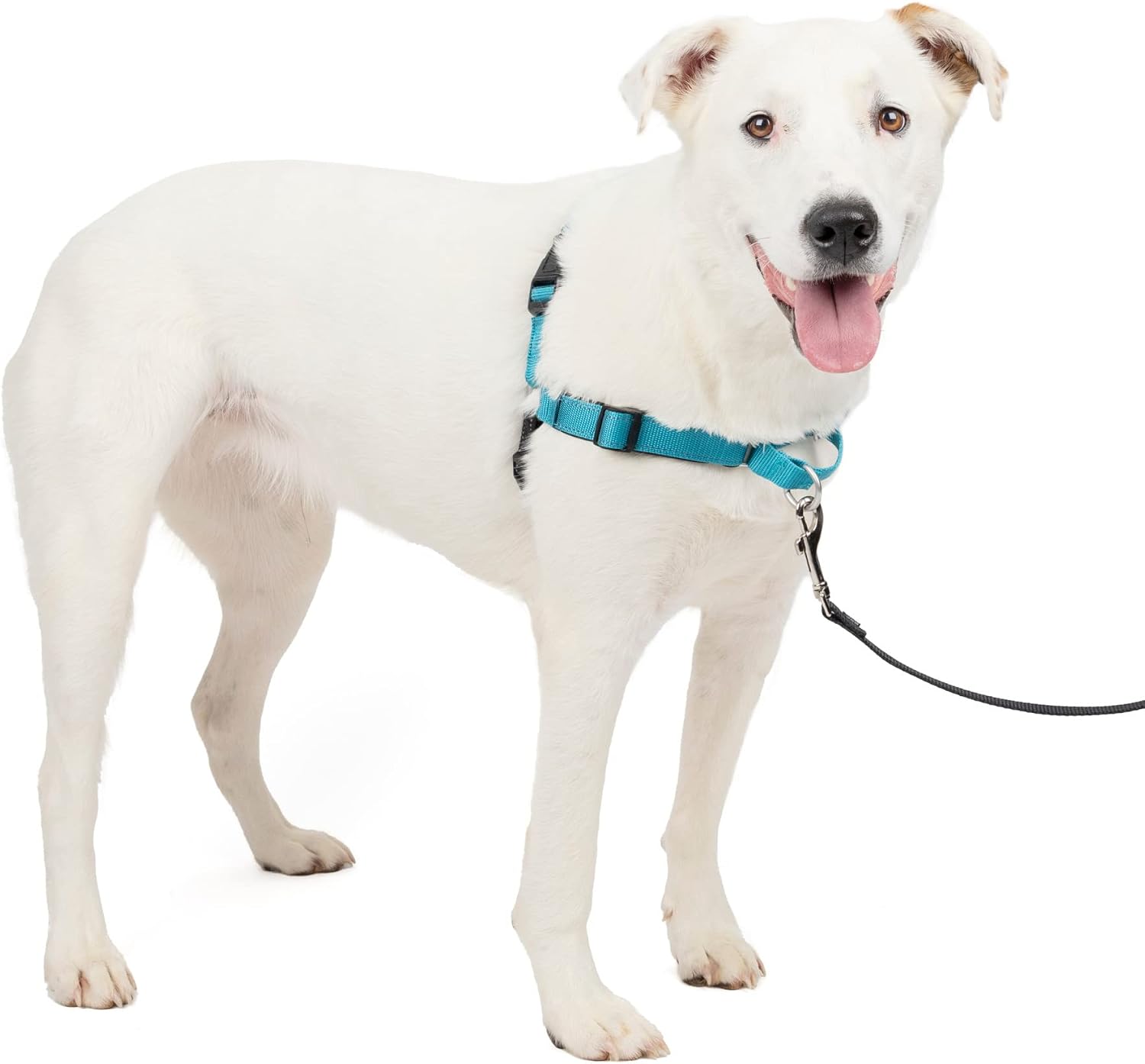
The same design as the Original with the two things most owners end up wishing they had: padded neoprene straps where a chest harness rubs, and reflective strips for walks after dark. The martingale loop and front chest clip work exactly as on the Original, it goes on with quick-snap shoulder and belly straps, and it still has less coverage than most harnesses, so it stays cool. At 4.4 stars across nearly fifteen thousand reviews it is the best rated of the three. PetSafe pitch it at light to moderate pulling, and their customer care will resize or replace it if you pick the wrong size or the dog chews it.
Pros
- Padded neoprene straps where chest harnesses usually rub
- Reflective strips for walks in the dark
- Best rated of the three, on a large review base
- Resizing and replacement support if you get the size wrong
Cons
- Aimed at light to moderate pulling, not a very powerful dog
- Front clip only, with no back clip for running
Best value, lightest
PetSafe Easy Walk Harness (Original)
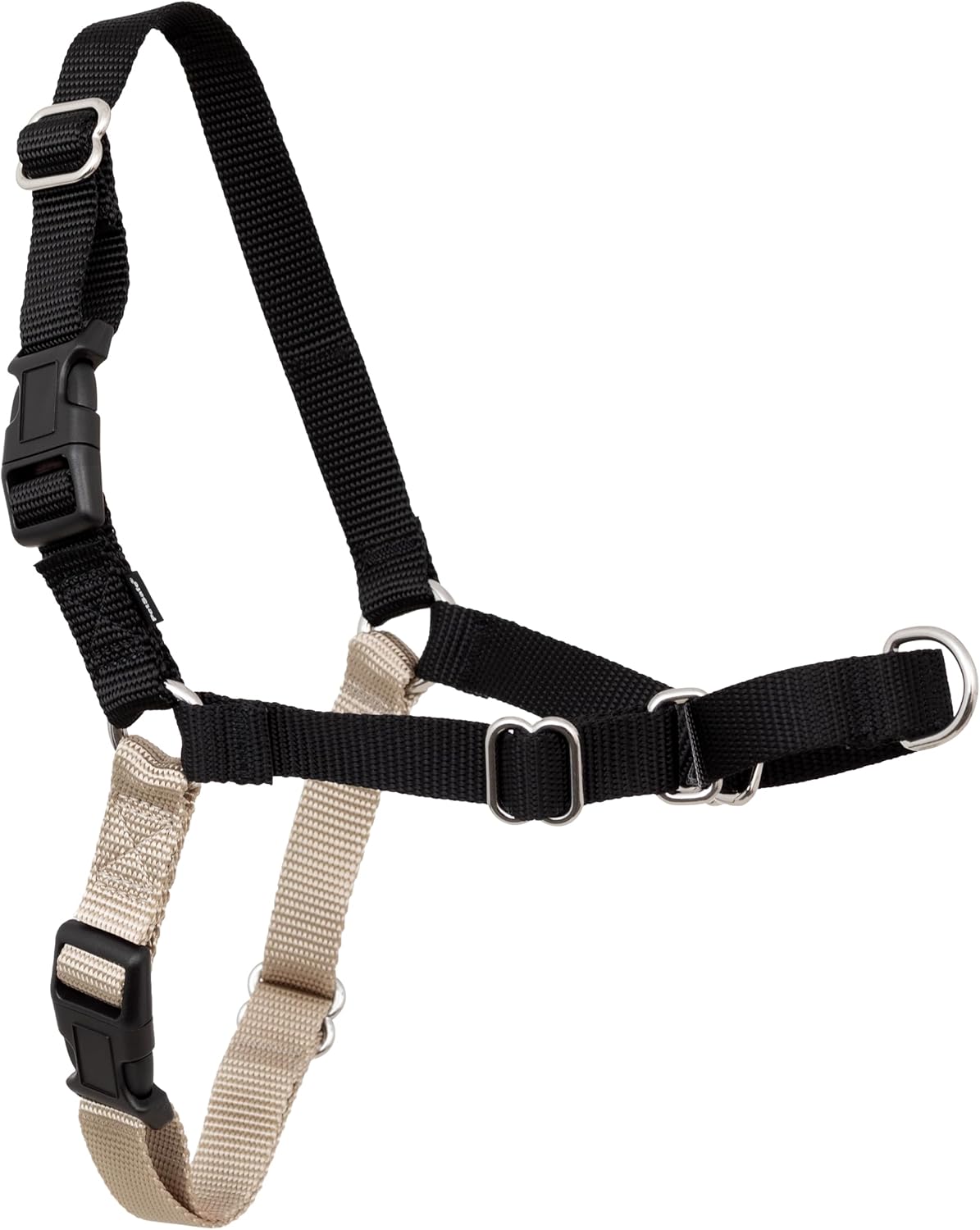
The harness that started the category, created by a veterinary behaviourist in 2004 and still the benchmark, with more than forty-nine thousand reviews behind a 4.3 star average. It is the minimal version: unpadded nylon straps, a martingale loop with a front chest clip, quick-snap shoulder straps and a belly strap in a different colour so you put it on the right way round. Less material makes it light and breathable, which suits a hot climate or a dog that dislikes wearing things. The cost of that is comfort at the strap edges, so fit matters even more than on the padded versions.
Pros
- The most thoroughly evidenced no-pull harness there is
- Light and breathable, with minimal coverage
- Colour-coded belly strap makes it hard to fit backwards
Cons
- Unpadded straps rub if the fit is off
- No back clip and no handle
Best for runs and rough ground
PetSafe Easy Walk Comfort No-Pull Harness
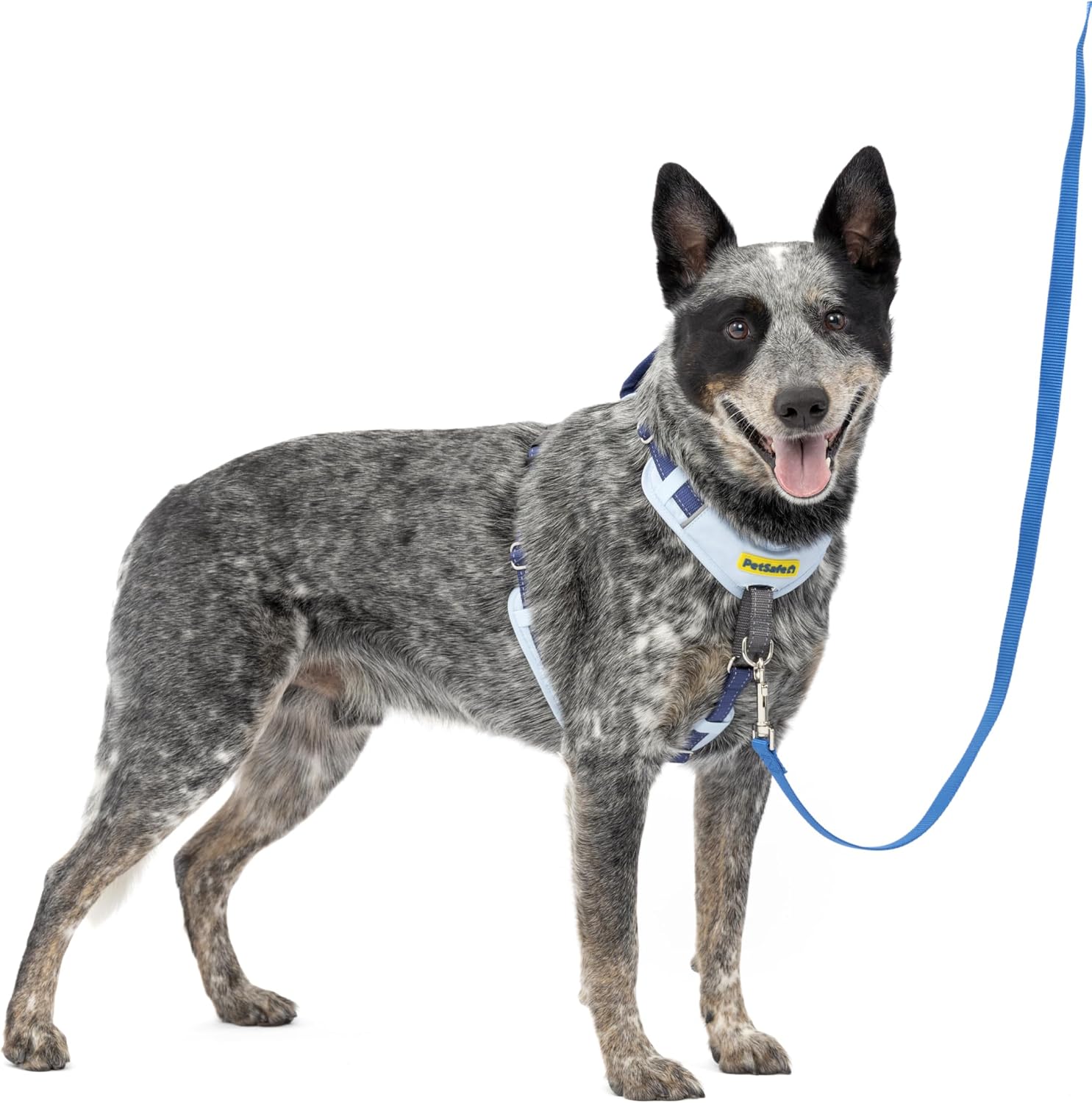
The one to buy if your walks are not only walks. Alongside the front martingale loop it adds a back clip for running, where you want the dog moving freely rather than being turned, and a top handle for steadying a dog on steps or a rocky path. Full body padding and five adjustment points make it the most adjustable of the three, though getting it right takes a couple of attempts. This is the newest version, and at 4.2 stars on a few hundred reviews its evidence base is far thinner than the Original's or the Deluxe's.
Pros
- Back clip for running as well as a front loop for walking
- Top handle for steadying a dog on steps or rough ground
- Full body padding and five adjustment points
Cons
- Only a few hundred reviews so far
- More adjustment points take longer to set up
Frequently asked questions
Does the Easy Walk actually stop pulling?
It reduces it, which is not the same thing. The leash clips to a loop on the chest, so when the dog leans forward the pressure turns it sideways toward you instead of letting it pull straight ahead. That takes a lot of the power out of pulling. It does not teach a dog to walk on a loose lead; you still have to do that, and the harness makes the walks calmer while you do. PetSafe describe the Deluxe version as controlling light to moderate pulling, which is an honest limit worth taking seriously with a very strong dog.
Is it bad for my dog's shoulders?
The research is much thinner than the confident claims online. A systematic review found only three usable studies, and the most reliable, on nine dogs walking on a treadmill, found that every harness tested reduced shoulder extension slightly, with the Y-shaped design often marketed as non-restrictive reducing it more than a chest strap. No study has linked harness type to injury. A separate pilot study found that walking on a lead changed dogs' gait more than wearing the harness alone, which points at the thing that matters most: reducing the pulling.
Which size should I get?
Measure, do not guess from breed or weight. PetSafe size these by real chest measurements and say so on every listing, and almost every complaint about rubbing, slipping or a dog backing out comes down to fit. Our guide to measuring a dog for a harness covers where to put the tape.
Why does it rub behind the front legs?
Because that is where the belly strap sits, and a chest harness that is too loose or set too far back slides and rubs there. Check that you can fit two fingers under each strap and no more, and that the chest strap sits across the breastbone rather than drifting toward the throat. The padded Deluxe and Comfort versions exist largely to address this.