The Best Self Cleaning Litter Boxes (2026)
Self cleaning litter boxes from PETKIT, PetSafe, Neakasa, PetSnowy and Casa Leo, compared on running costs and the sensor faults owners hit in year two.
A self-cleaning litter box is the most expensive thing most people will buy for a cat, and the decision usually comes down to three questions the marketing does not answer: will the cat use it, what does it cost to keep running, and what breaks first.
If you arrived looking for the Whisker Litter-Robot 4, the machine the others here are usually measured against, it has its own full review rather than a slot on this list, and our Litter-Robot vs PetSafe ScoopFree comparison sets it against the odour-control pick below.
Running costs are the number nobody quotes
The purchase price is roughly half the story. Every box here consumes something: waste liners or bags, carbon filters or odour packs, and in the ScoopFree’s case whole disposable crystal trays.
The distinction that matters is proprietary versus standard. Boxes that sift ordinary clumping litter let you keep buying whatever is cheapest, and the consumable is a liner and a filter. The crystal system trades that flexibility for the best odour control in the category. Neither is wrong, but work out the yearly figure before you compare prices, because over three years it can exceed the difference between the machines.
Sensors fail before motors do
Read the one star reviews of any automatic box and the same story repeats: it cycles when nothing is there, or it refuses to cycle at all. That is almost always litter dust on the infrared sensor windows rather than a dead machine.
Wipe the sensor windows with a dry cloth every couple of weeks. It takes ten seconds and it prevents the fault that generates most of the support traffic in this whole category. If a box is still misbehaving after a clean, check the manufacturer’s reset procedure before assuming it is broken.
The cat gets a vote
The biggest cause of a returned automatic box is a cat that will not use it, and enclosed globe designs attract that complaint most. Introduce it unplugged alongside the existing tray, and leave both available for a fortnight. If your cat is large, elderly or timid, weight the open-top design accordingly. Our best cat water fountains guide makes the same argument about never removing the old option on day one.
Sudden litter box avoidance, especially with straining or blood, is a vet matter and often urgent in male cats. No product here addresses that, which is why a health counter logging unusual visit frequency earns its place. If someone else is scooping while you are away, our guide to litter box visit rates covers the warning signs they need to know.
The honorable mentions list is empty deliberately: what remained after the five above were bundle listings of the same machines rather than distinct products. Five picks we stand behind beats eight links where three are the same box with a mat thrown in. For the cheaper, non-automatic route, our best slow feeder dog bowls piece makes the parallel case in feeding.
Size is the one thing an automatic box cannot flex on, and a Maine Coon or Ragdoll will out-measure most of the enclosed designs above. If that is your cat, our best litter boxes for large cats roundup covers the manual boxes with the interior length to suit, including the high-sided designs that stop over-the-edge accidents.
How we test
Every pick is scored on the same five criteria and cross-checked against real owner feedback - so the ranking reflects how a product holds up after six months in a real house with a real animal, not its spec sheet.
Build
Materials and construction: pump and motor quality, whether plastics are food safe, and how well the thing is actually put together.
Cleaning
How much work it is to keep hygienic. Dishwasher-safe parts, how many pieces it breaks into, and whether biofilm can hide in a corner you cannot reach.
Durability
Whether it survives months of daily use, chewing, scratching and repeated washing without the motor dying or the seals failing.
Pet fit
Whether animals will actually use it: size range, whisker clearance, height, and how the design suits nervous or senior pets.
Value
What you get for the price, including the running cost of filters, liners and other consumables it locks you into.
Best overall
PETKIT PuraMax 2
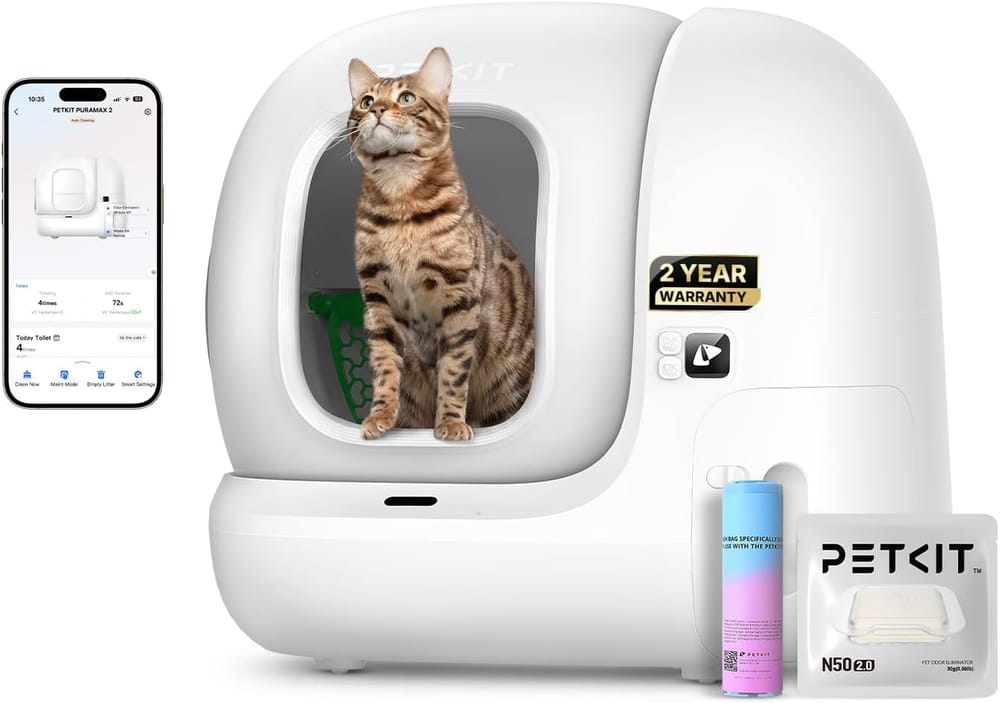
The most balanced machine here, and the one that does what most households want without a proprietary consumable: PETKIT say it works with most clumping litters, so you keep buying whatever is cheapest. The waste goes into a sealed 7L bin rated for up to 15 days, with an odour remover in the box, and a sealed base and fitted litter pad are designed to stop leaks around the drum. The app identifies each cat by weight and logs its weight, visits and time in the box, which is useful health data in a multi-cat home. Seven infrared and four weight sensors pause the cycle when a cat approaches. At 4.3 stars across more than two and a half thousand reviews it is the best rated box on this page. It needs a hard floor, because PETKIT warn that carpet and mats interfere with the sensors, and the enclosed design is the kind some cats refuse.
Pros
- Works with most clumping litters, so no proprietary consumable
- Sealed 7L waste bin, rated for up to 15 days
- Identifies each cat by weight and logs visits
- Best rated box on this page
Cons
- Must sit on a hard floor, not carpet or a mat
- Enclosed design is the kind some cats refuse
Best odour control
PetSafe ScoopFree Crystal Pro
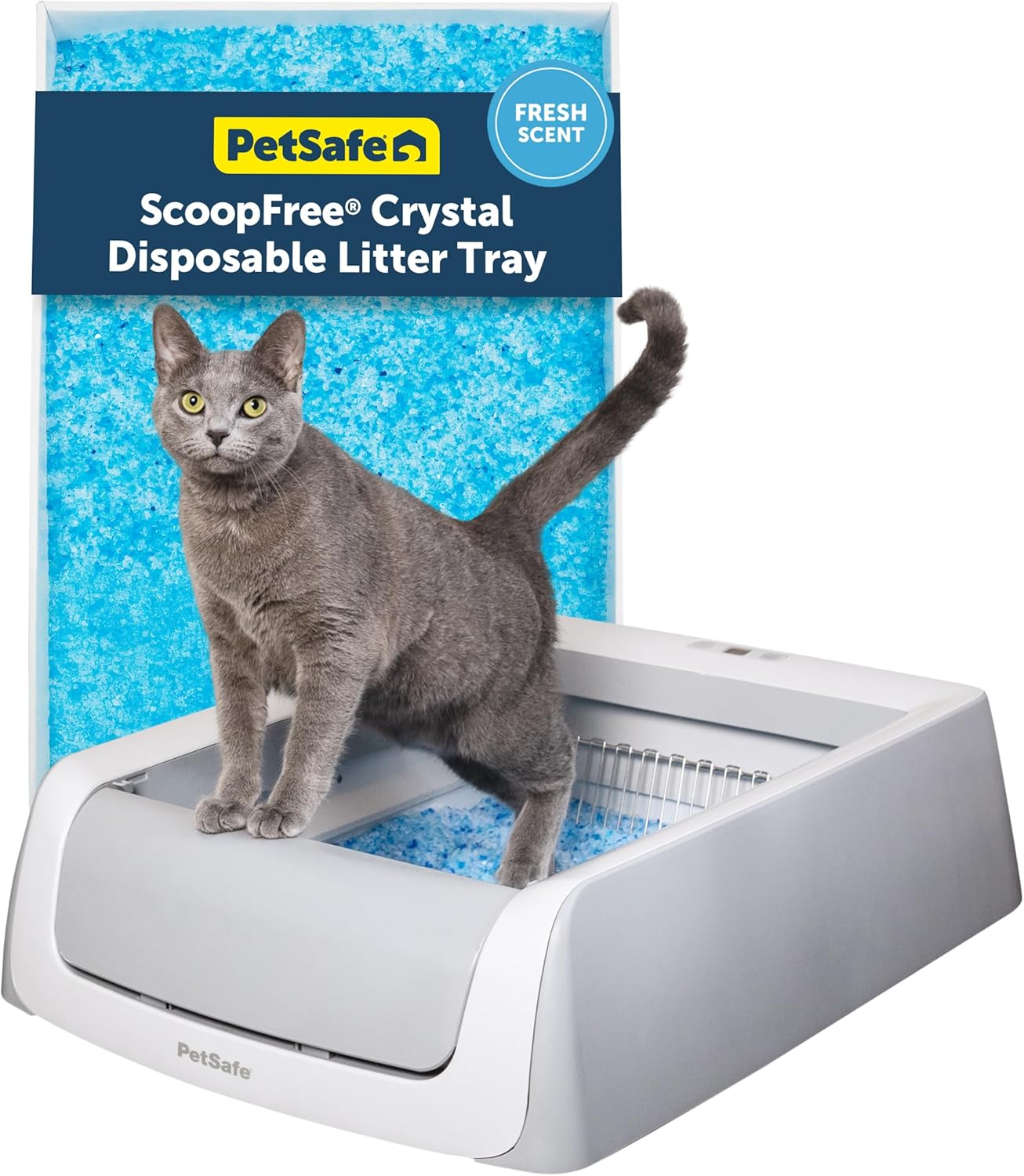
The ScoopFree takes a different approach: crystal litter dehydrates solids and absorbs urine rather than clumping it, and a rake sweeps the remainder into a covered trap. On smell it is the best thing here, and if the litter box lives anywhere near where people eat or sleep that advantage is worth real money. It is also the lowest-effort box on this page, because you replace a whole tray rather than scooping or emptying a drawer. That convenience is the catch: those disposable crystal trays are a proprietary consumable and the most expensive running cost in this roundup. Ten thousand reviews at 4.1 stars make it the best-evidenced machine here, and the health counter that logs visits is a genuinely thoughtful touch.
Pros
- Best odour control of any box here, by a clear margin
- Replace a tray rather than scooping or emptying a drawer
- Health counter logs visits, which catches urinary problems early
- Much cheaper to buy than the Litter-Robot
Cons
- Proprietary crystal trays are the highest running cost here
- Crystal litter is not what most cats are used to underfoot
Best for large and nervous cats
Neakasa M1 Plus
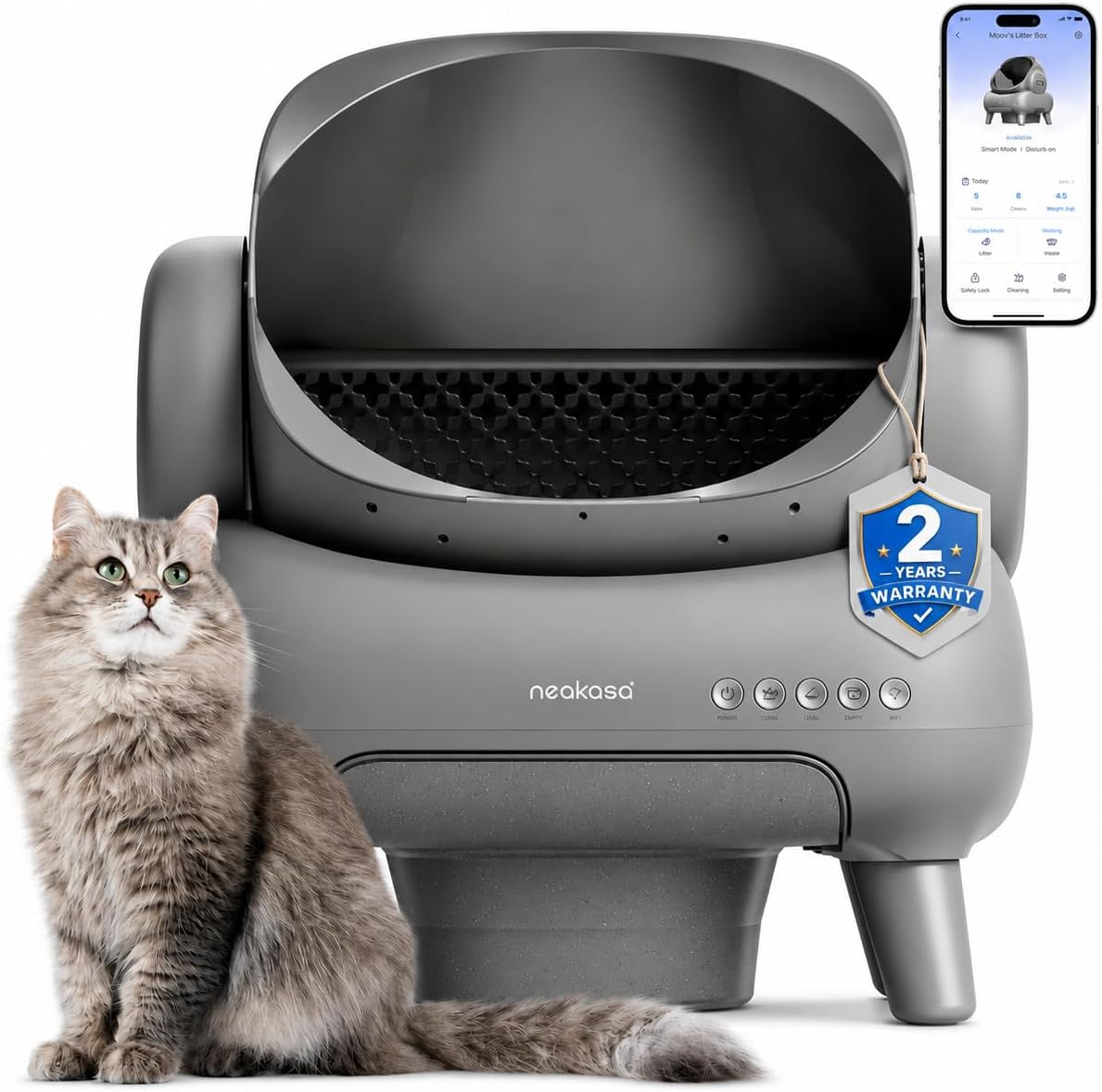
The M1 Plus solves the problem that stops people buying an automatic box at all: it is open topped, so there is no chamber for a cat to step into and no sense of being enclosed. For a Maine Coon, a cat that has never used a hood, or a nervous rescue, that is the difference between a working box and an expensive ornament. It sifts into a bin below and takes any clumping litter. Six pairs of infrared sensors plus four weight sensors pause the cycle on contact, one of the most thorough safety setups here. The trade-off is inherent to the design: an open box contains less odour than a hooded one, so this is the wrong pick if smell is your main complaint.
Pros
- Open top, so cats that refuse enclosed boxes will still use it
- Genuinely roomy for large breeds and multi-cat homes
- One of the most thorough safety sensor arrays here
- Takes standard clumping litter
Cons
- Open design contains odour less well than a hooded box
- Litter tracking is worse without a hood to catch it
Best value smart box
Casa Leo Leo's Loo Too
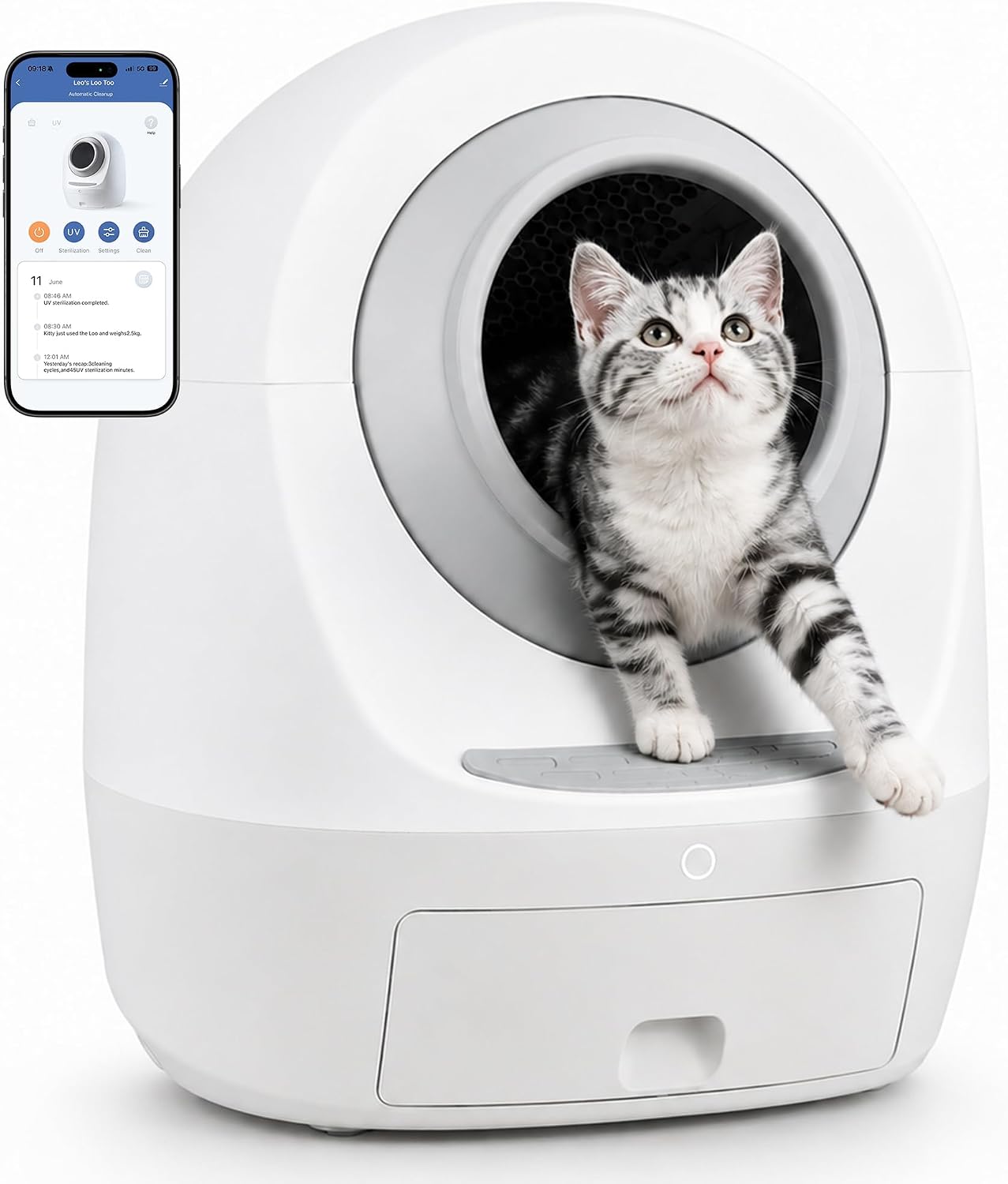
Leo's Loo Too is the sensible way into an app-connected box without Litter-Robot money. You get weight tracking, app and voice control, UV odour treatment in the waste chamber, and a cycle quiet enough at around 30 decibels that it will not wake anyone. It takes standard clumping litter, so no proprietary trays. Where it gives ground is longevity: at 4.0 stars on a few hundred reviews the complaints skew toward sensor reliability and app connection rather than anything catastrophic, and that is why durability scores three. If you want most of the Litter-Robot experience and can accept a machine with a shorter track record, this is the value pick in a category where value is otherwise scarce.
Pros
- App, voice control and weight tracking at well under Litter-Robot money
- UV treatment in the waste chamber genuinely helps with smell
- Around 30 decibels, quiet enough for a bedroom
- Standard clumping litter, no proprietary consumable
Cons
- Shortest track record here, with sensor and app complaints
- Smaller chamber than the Neakasa for a large cat
Best odour tech
PetSnowy Self-Cleaning Litter Box
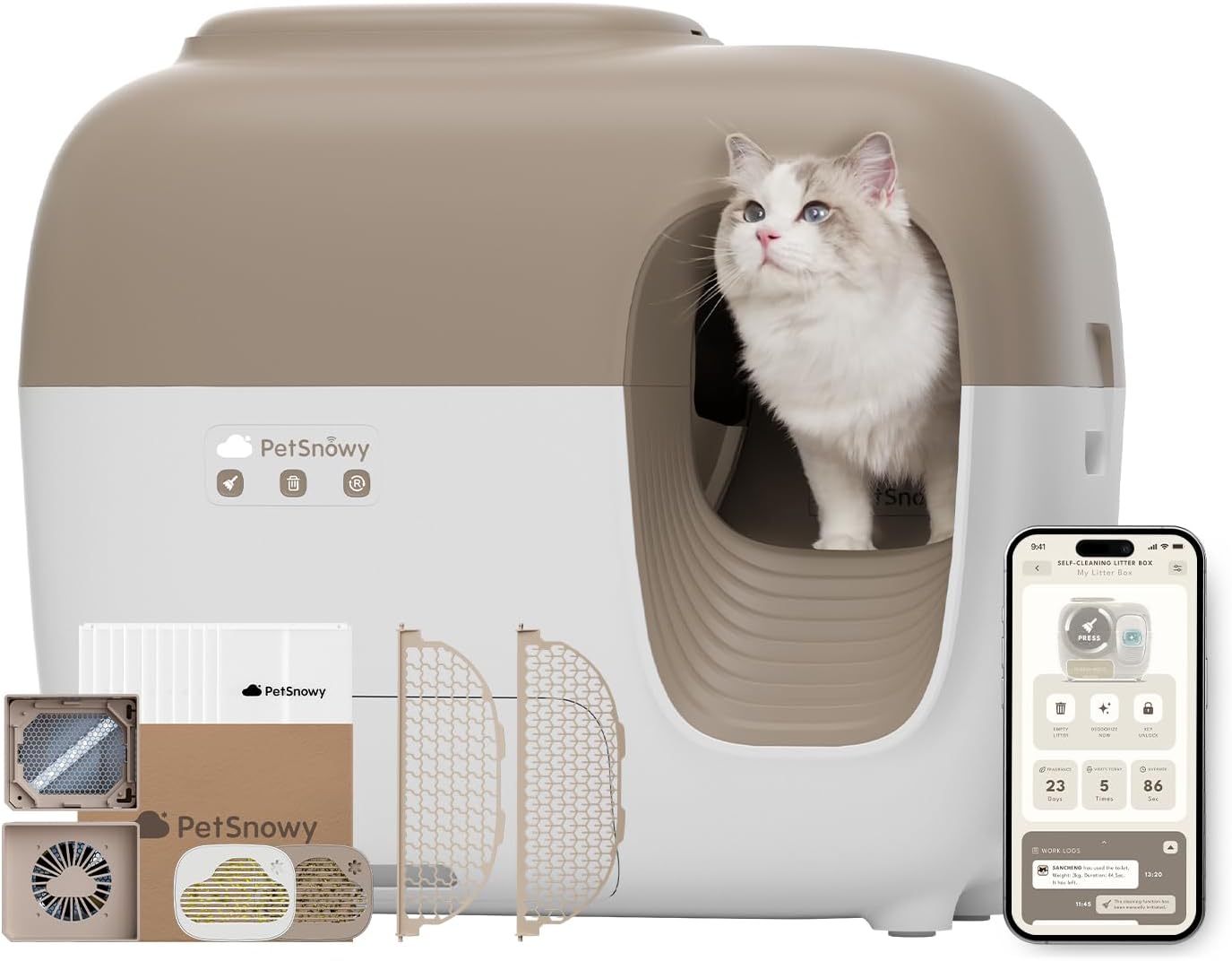
The PetSnowy is the one that attacks smell without locking you into a proprietary litter. Waste is auto-packed into a sealed bag rather than dropped into an open drawer, so the odour never gets a chance to escape into the room, and a titanium dioxide system works on what remains. That combination gets it closer to the ScoopFree on smell while still taking ordinary clumping litter, which is a genuinely useful middle ground. The chamber is roomy enough for large cats. At 4.1 stars across around twelve hundred reviews the evidence base is thinner than the established machines, and the complaints skew toward the packing mechanism jamming, which is why durability scores three rather than four.
Pros
- Auto-packs waste into a sealed bag, so odour never reaches the room
- Takes standard clumping litter despite the odour focus
- Roomy chamber that suits large cats
- Genuine middle ground between the Litter-Robot and the ScoopFree
Cons
- Packing mechanism is the reported weak point
- Thinner review base than the established machines
Frequently asked questions
Will my cat actually use one?
Most cats adapt within a fortnight, but not all, and the enclosed globe designs are the ones that get refused. A nervous cat, a large cat, or one that has always used an open tray may balk at stepping into a chamber. Run the new box unplugged alongside the old one for a week so it is just a litter box, then switch the power on. Keep the old tray available for another week after that. Never remove the alternative on day one.
What do they actually cost to run?
More than the sticker suggests, and this is the number to check before you buy. Waste drawer liners or bags, carbon filters or odour packs, and in the ScoopFree's case disposable crystal trays are all consumables, and the crystal system is the most expensive of them over a year. Work out the annual consumable cost for the model you are considering and add it to the purchase price before you compare.
Are they safe for kittens?
Automatic modes have a weight floor, usually around three pounds, below which the sensors may not register a cat. Kittens under that should use a normal tray, and most manufacturers say so in the manual. Every box here has infrared or weight sensors that pause a cycle when something enters, but sensors are the part that fails, so supervise the first few weeks with any small or elderly cat.
Which part breaks first?
The sensors, by a wide margin. Cat litter dust coats the infrared emitters and the box starts either cycling when nothing is there or refusing to cycle at all. Nearly all of it is fixed by wiping the sensor windows with a dry cloth every couple of weeks, which is the single most useful maintenance habit for any of these machines.