Litter-Robot vs PetSafe ScoopFree (2026): Which Self Cleaning Box Wins?
Litter-Robot 4 versus PetSafe ScoopFree Crystal Pro on litter freedom, odour control, running costs, and which cats refuse which design.
These are the two automatic litter boxes most people end up choosing between, and they are not really competing on the same axis. One is a better machine. The other is better at the thing most people actually bought an automatic box to fix.
Buy the ScoopFree if the problem is smell
If the litter box lives in a flat, near a kitchen, or anywhere you entertain, odour is the whole brief. Crystal litter dehydrates waste rather than sealing it in a clump, and the covered trap keeps what remains out of the air. Nothing else we have tested matches it.
You pay for that in consumables, forever. The trays are proprietary, and unlike clumping litter you cannot shop around.
Buy the Litter-Robot if the problem is labour, or you are keeping it for years
It sifts the litter you already buy. That single fact is why it costs less to run despite costing far more to buy, and over three years the gap is large enough to change the comparison. The larger drawer means fewer interventions, the weight tracking is real health information, and the build quality is visibly a tier above. Our full Litter-Robot 4 review covers how it fails and who should buy something cheaper.
Its sensors are the known weak point, and nearly every reported fault traces to litter dust on the infrared windows. Wipe them fortnightly with a dry cloth and most of the category’s support traffic never happens to you.
The risk they share
Neither is safe from the only judge that counts. A cat that will not use an automatic box turns either machine into an expensive ornament, and the enclosed globe attracts that complaint more than the ScoopFree’s conventional tray does.
Run whichever you buy unplugged, beside the existing tray, for a week before switching it on, and leave the old tray available for a fortnight after. Our guide to introducing a cat to a self cleaning litter box covers the full sequence, and the running costs breakdown does the three-year arithmetic on both.
If neither suits, the open-topped Neakasa in our best self cleaning litter boxes roundup is the pick for large or nervous cats that refuse an enclosure.
Sudden litter box avoidance, straining, or blood is a vet matter and often urgent in male cats. No machine on this page addresses that, which is exactly why a box that logs unusual visit frequency earns its place.
How we test
Every pick is scored on the same five criteria and cross-checked against real owner feedback - so the ranking reflects how a product holds up after six months in a real house with a real animal, not its spec sheet.
Build
Materials and construction: pump and motor quality, whether plastics are food safe, and how well the thing is actually put together.
Cleaning
How much work it is to keep hygienic. Dishwasher-safe parts, how many pieces it breaks into, and whether biofilm can hide in a corner you cannot reach.
Durability
Whether it survives months of daily use, chewing, scratching and repeated washing without the motor dying or the seals failing.
Pet fit
Whether animals will actually use it: size range, whisker clearance, height, and how the design suits nervous or senior pets.
Value
What you get for the price, including the running cost of filters, liners and other consumables it locks you into.
Better machine
Whisker Litter-Robot 4
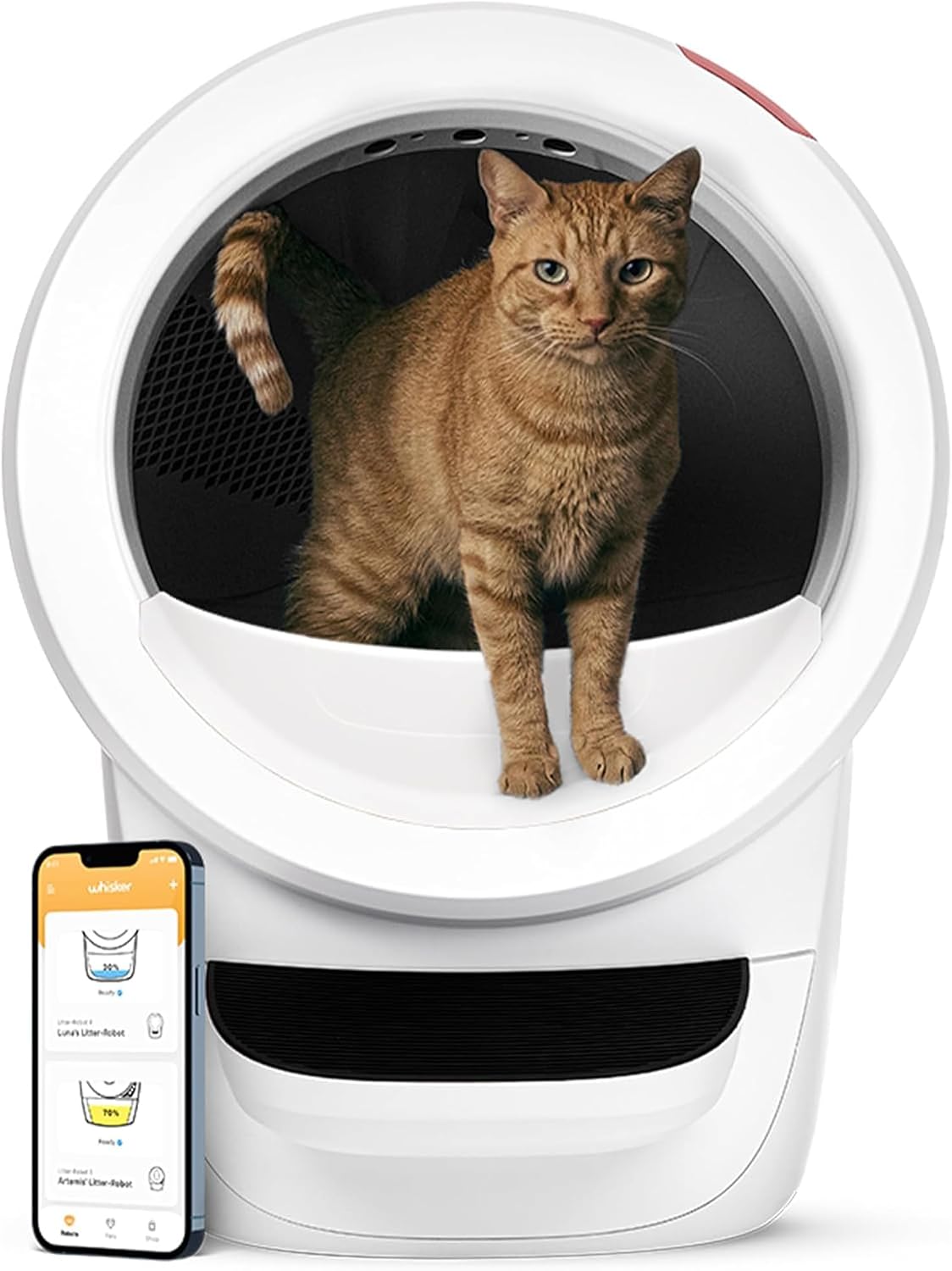
The best-engineered box in the category and the one to buy if you intend to keep it for years. It sifts any clumping litter you already use, which frees you from a proprietary consumable, and the waste drawer is large enough that a single cat needs emptying about weekly. Per-cat weight tracking is genuine health data rather than an app gimmick, since gradual weight loss is often the first visible sign of trouble. It is also the most expensive thing on this site by a distance, the enclosed globe is the design cats are most likely to refuse, and its sensors are the documented weak point, which is why durability scores four rather than five.
Pros
- Takes any clumping litter, so no proprietary consumable
- Lowest running cost here over three years
- Per-cat weight tracking that is actually useful
- Largest waste capacity, best suited to multi-cat homes
Cons
- By far the higher purchase price
- Enclosed globe is the design cats refuse most
Better on smell
PetSafe ScoopFree Crystal Pro
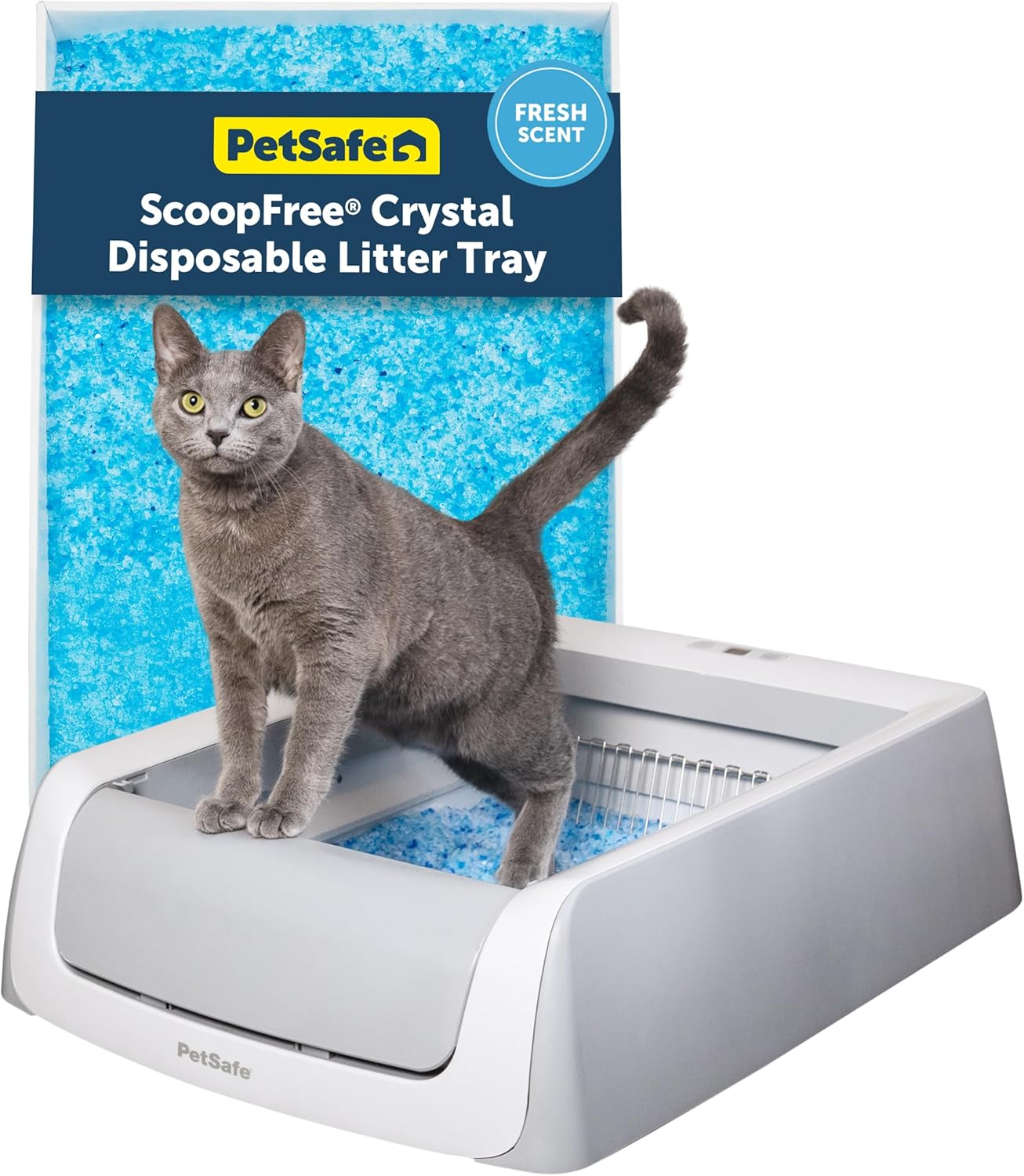
The ScoopFree solves a different problem and solves it better than anything else here. Crystal litter dehydrates solids and absorbs urine instead of clumping, and a rake sweeps the rest into a covered trap, so on smell it is the best box we have tested. It is also the lowest-effort option, because you replace a whole tray rather than scooping or emptying a drawer. That convenience is the catch: those trays are proprietary and the most expensive running cost in this roundup. With more than ten thousand reviews at 4.1 stars it is the best-evidenced machine in the category, and the health counter that logs visits is a genuinely thoughtful inclusion.
Pros
- Best odour control of any automatic box
- Replace a tray rather than scooping or emptying
- Health counter logs visits, catching urinary problems early
- Much cheaper to buy than the Litter-Robot
Cons
- Proprietary crystal trays are the highest running cost here
- Crystal substrate feels unfamiliar to cats used to clumping litter
Frequently asked questions
Which controls odour better?
The ScoopFree, clearly. Crystal litter dehydrates solids and absorbs urine rather than clumping it, and the waste sits in a covered trap you replace whole. If the box lives near a kitchen, a bedroom or a small flat's living space, that advantage is worth real money and it is the main reason to choose it over the better-engineered machine.
Which is cheaper to run?
The Litter-Robot, and it is not close over three years. It sifts whatever clumping litter you already buy, so its consumables are drawer liners and a carbon filter. The ScoopFree's disposable crystal trays are proprietary and are the highest running cost of any product we have reviewed. Work out the annual figure for both before comparing purchase prices, because it can invert the answer.
Which will my cat accept?
Neither reliably, and this is the risk both share. The Litter-Robot's enclosed globe is the design cats refuse most often, particularly large, elderly or nervous cats. The ScoopFree is a more conventional open or hooded tray, so it asks less of a cat behaviourally, but the crystal substrate feels different underfoot and some cats object to that instead. Whichever you buy, run it unplugged next to the old tray for a week first.
Which is better with multiple cats?
The Litter-Robot. Its waste drawer is larger, it tracks weight per cat so you can see who is using it, and it copes with the volume better. The ScoopFree's tray fills faster with more animals, and that is the consumable you are paying for.