How To Introduce a Cat To a Self Cleaning Litter Box
A two-week sequence for switching a cat to an automatic litter box without triggering refusal, and when to accept the machine is wrong for yours.
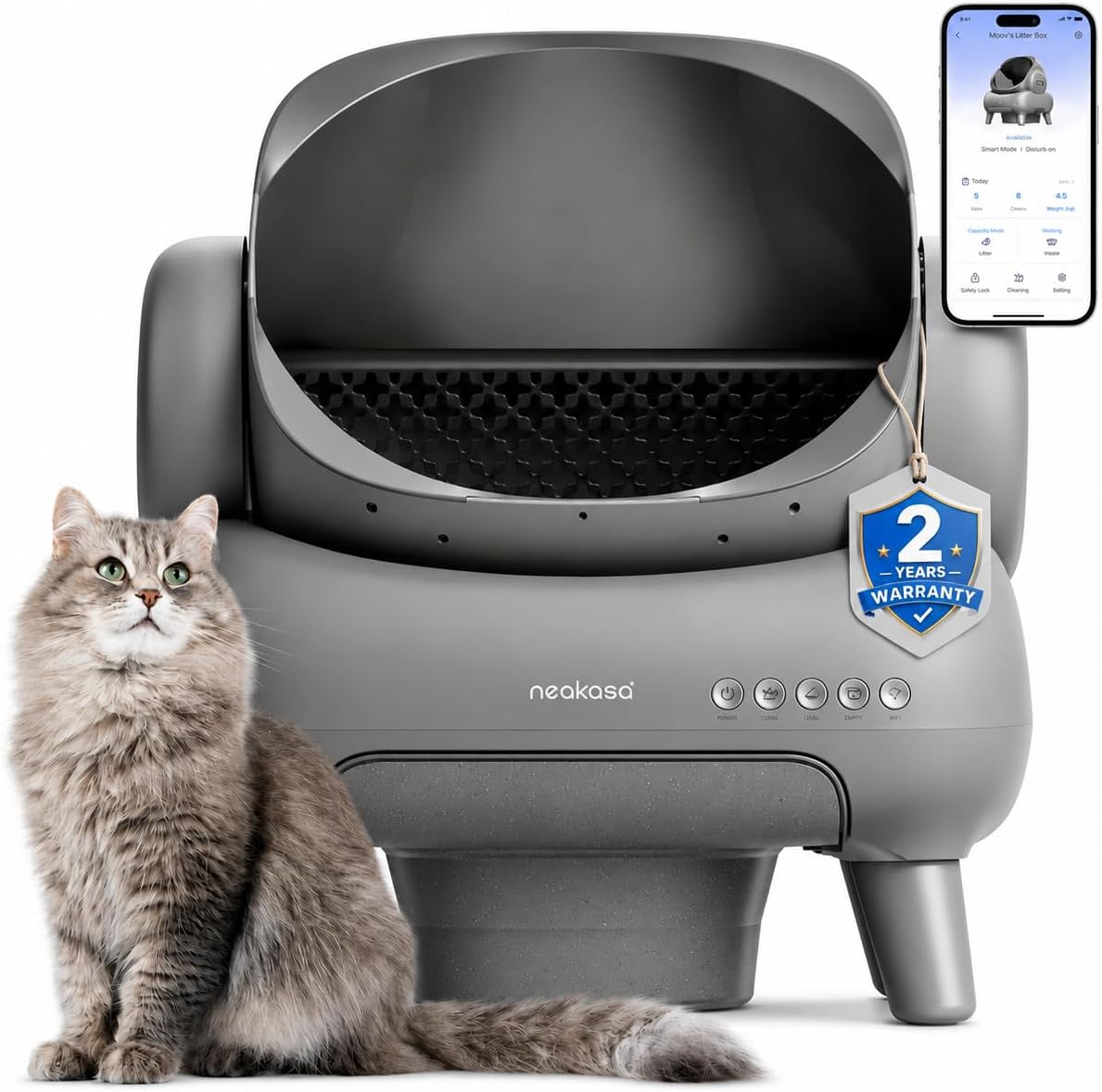
The failure mode with an automatic litter box is not mechanical. It is a cat that decides the machine is not a litter box, and once that decision is made it is slow to undo. Almost all of it is avoidable with two weeks of patience.
The sequence that works
Days 1 to 5: no power. Put the new box where you eventually want it, fill it with the litter your cat already uses, and leave it switched off. It is now simply a second tray. Keep the old tray exactly where it is.
Days 6 to 10: power on, cat absent. Switch the box on and run a cycle when the cat is in another room. The point is that the first cycle it hears comes from a distance rather than from directly underneath it. Continue keeping the old tray available.
Days 11 to 14: overlap. Let the cat use both. Most cats will have picked the new box by now, because a freshly cleaned tray is more appealing than a used one and the machine wins that comparison every time.
After day 14: if the new box is being used consistently, remove the old tray. If it is not, do not remove it. A cat with no acceptable option does not learn to use the machine; it finds a rug.
What actually causes refusal
Enclosure. The globe designs are the ones cats refuse most often. If your cat has spent years using an open tray, an enclosed chamber that occasionally moves is a big ask.
Substrate. A box that requires crystal litter is asking your cat to accept a different feel underfoot at the same moment as a different box. If you are switching to a crystal system, introduce the crystals in the old tray first and change one variable at a time.
Location. Cats avoid eliminating near where they eat, and dislike positions with no escape route. An automatic box is bulky and often ends up wherever it physically fits, which is frequently a corner the cat was never keen on.
Noise. Less common than people assume, but real for anxious cats. The quietest machines run around 30 decibels; the difference between that and a louder one is the difference between indifference and a cat that leaves the room.
When to stop trying
Some cats never accept one, and persisting has a cost measured in soiled carpet and a stressed animal. If you are a month in with an unused machine, the honest options are to move it somewhere better, switch to an open-topped design, or accept that a manual tray is what your cat wants.
Our best self cleaning litter boxes roundup ranks an open-topped model specifically for large, elderly and nervous cats, and the Litter-Robot versus ScoopFree comparison covers which design asks less of a cat behaviourally.
Before buying at all, the running costs guide is worth ten minutes, because a machine your cat refuses is the most expensive outcome available.
The health boundary
Litter box behaviour is one of the clearest health signals a cat gives you, and it is worth saying plainly: a change in habits is a veterinary question before it is a product one. Straining, frequent unproductive visits, blood, or crying in the tray all warrant a call, and in a male cat a suspected urinary blockage is an emergency that cannot wait for a morning appointment.
We review products. We are not veterinarians, and no machine on this site diagnoses anything. What the better ones do is log how often each cat visits, which is genuinely useful precisely because it tells you when to make that call.
If the refusal turns out to be about space rather than the machine, which is common with a large cat asked to fold itself into an enclosed globe, our best litter boxes for large cats roundup covers the manual boxes big enough to be a genuine alternative.
Frequently asked questions
How long does it take a cat to accept one?
Most cats that are going to accept an automatic box do so within two weeks, and many within a few days. If you are three weeks in with the old tray still doing all the work, the issue is unlikely to be time. At that point change something specific, usually the location or the substrate, rather than waiting longer.
Should I run the cycle while my cat is nearby?
Not in the first week. Let the cat use it as a plain tray with the power off, then switch it on when the cat is out of the room so the first cycle it hears happens at a distance. Every box here pauses on contact via infrared or weight sensors, but a cat startled by the first cycle can associate the noise with the box permanently.
My cat has started going outside the box. What now?
Treat it as a health question first and a behaviour question second. Sudden litter box avoidance, especially with straining, frequent small visits, or any blood, warrants a vet promptly, and in male cats a urinary blockage is an emergency. Only once that is ruled out should you look at the box, the litter or the location.
Which cats struggle most?
Large cats that physically do not fit an enclosed chamber, senior or arthritic cats that find a raised entrance hard, nervous rescues, and cats that have only ever used an open tray. For any of those, an open-topped automatic box asks far less of the animal than an enclosed globe does.