The Best Dog Raincoats (2026)
Dog raincoats compared on coverage, waterproofing, harness access and value, including why belly coverage matters more than the fabric rating for most dogs.
Most dogs do not need a raincoat and some genuinely do. A thick-coated retriever sheds a shower and dries itself; a whippet, a small terrier or an older dog with a thin coat loses heat quickly once wet, gets miserable, and cuts the walk short. There is also the unglamorous reason people actually buy them, which is that a coat keeps most of the mud on the coat instead of on your floor.
What we scored
Build, cleaning, durability, pet fit and value. Pet fit does most of the work here, because a raincoat that does not fit is not a compromised product, it is a useless one: too short and the back end soaks, too tight through the chest and the dog will not move properly in it.
Coverage matters more than the fabric rating
Listings compete on waterproof ratings, and past a certain point the number stops mattering for a thirty-minute walk. What varies far more between coats is how much dog is actually under the fabric.
Open-sided coats cover the back and flanks and leave the belly exposed, which is fine for a tall dog on wet grass and useless for a short-legged one wading through puddles. Wrap designs cover underneath and run warmer. Match the shape to the dog’s height rather than buying on the rating.
Seams are the other thing worth checking. A coated fabric with unsealed seams leaks at the stitching, which is why a coat can feel dry to the touch and still leave a wet stripe along the spine.
Fit, and the leash hole
Measure back length from the base of the neck to the base of the tail with the dog standing. Chest girth decides whether the coat closes at all on a barrel-chested dog.
Use the leash hole for a harness worn underneath, and clip the lead to the harness rather than to the coat. Coat fabric is not load-bearing. Our best no pull dog harnesses roundup covers harnesses that sit comfortably under a coat, and how to measure a dog for a harness applies to coat sizing just as well, since girth is the measurement both depend on.
The part after the walk
A coat keeps most of the water off, not all of it, and a wet dog in a warm house is how a damp-dog smell starts. Drying the dog properly at the door is the other half of wet-weather kit, and our best dog drying towels and robes roundup covers the microfibre towels and wearable robes that do it faster than a bath towel.
Cold is a health matter
A coat helps a dog stay comfortable. It is not protection against genuinely cold conditions, and shivering, reluctance to walk, or a dog lifting its paws repeatedly means the walk should end rather than continue in better kit. Puppies, seniors, thin-coated breeds and unwell dogs lose heat fastest. We review products and are not veterinarians.
How we test
Every pick is scored on the same five criteria and cross-checked against real owner feedback - so the ranking reflects how a product holds up after six months in a real house with a real animal, not its spec sheet.
Build
Materials and construction: pump and motor quality, whether plastics are food safe, and how well the thing is actually put together.
Cleaning
How much work it is to keep hygienic. Dishwasher-safe parts, how many pieces it breaks into, and whether biofilm can hide in a corner you cannot reach.
Durability
Whether it survives months of daily use, chewing, scratching and repeated washing without the motor dying or the seals failing.
Pet fit
Whether animals will actually use it: size range, whisker clearance, height, and how the design suits nervous or senior pets.
Value
What you get for the price, including the running cost of filters, liners and other consumables it locks you into.
Best overall
HDE Dog Raincoat with Hood
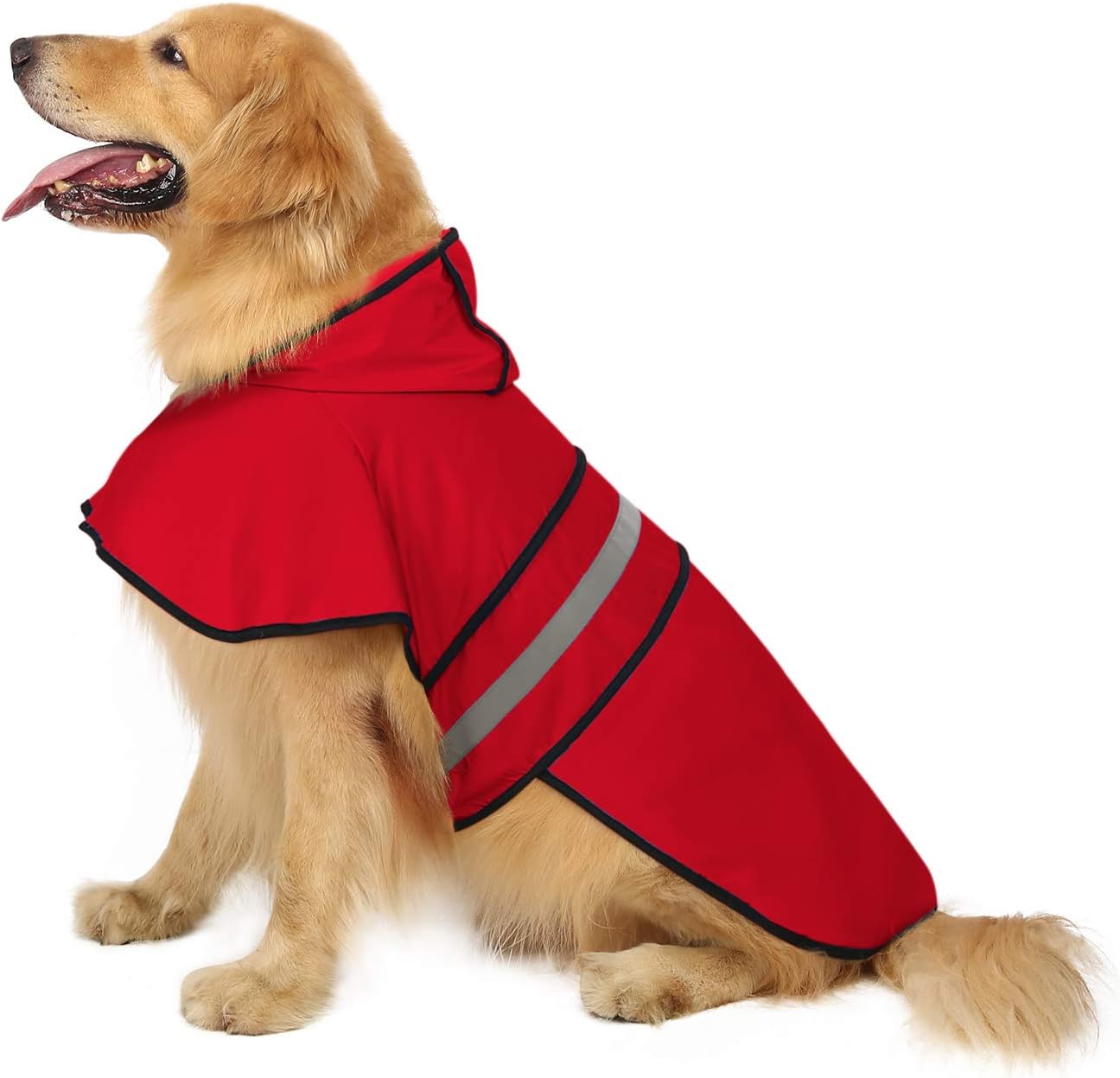
The sensible default, and on nearly twenty thousand reviews the best-evidenced raincoat on Amazon. It covers the back and flanks, has a leash hole positioned to work with a harness underneath, and the hood is soft enough to sit back off the head for dogs that will not tolerate one. It wipes down and dries quickly, which matters more than it sounds when the coat has to go back on the following morning. Belly coverage is partial rather than full, so a low-slung dog in deep puddles still gets wet underneath.
Pros
- Very large review base for the category
- Leash hole works with a harness worn underneath
- Hood folds back for dogs that dislike it
- Wipes clean and dries fast
Cons
- Partial belly coverage only
- Sizing runs small on deep-chested dogs
Best for large dogs
NACOCO Large Dog Raincoat
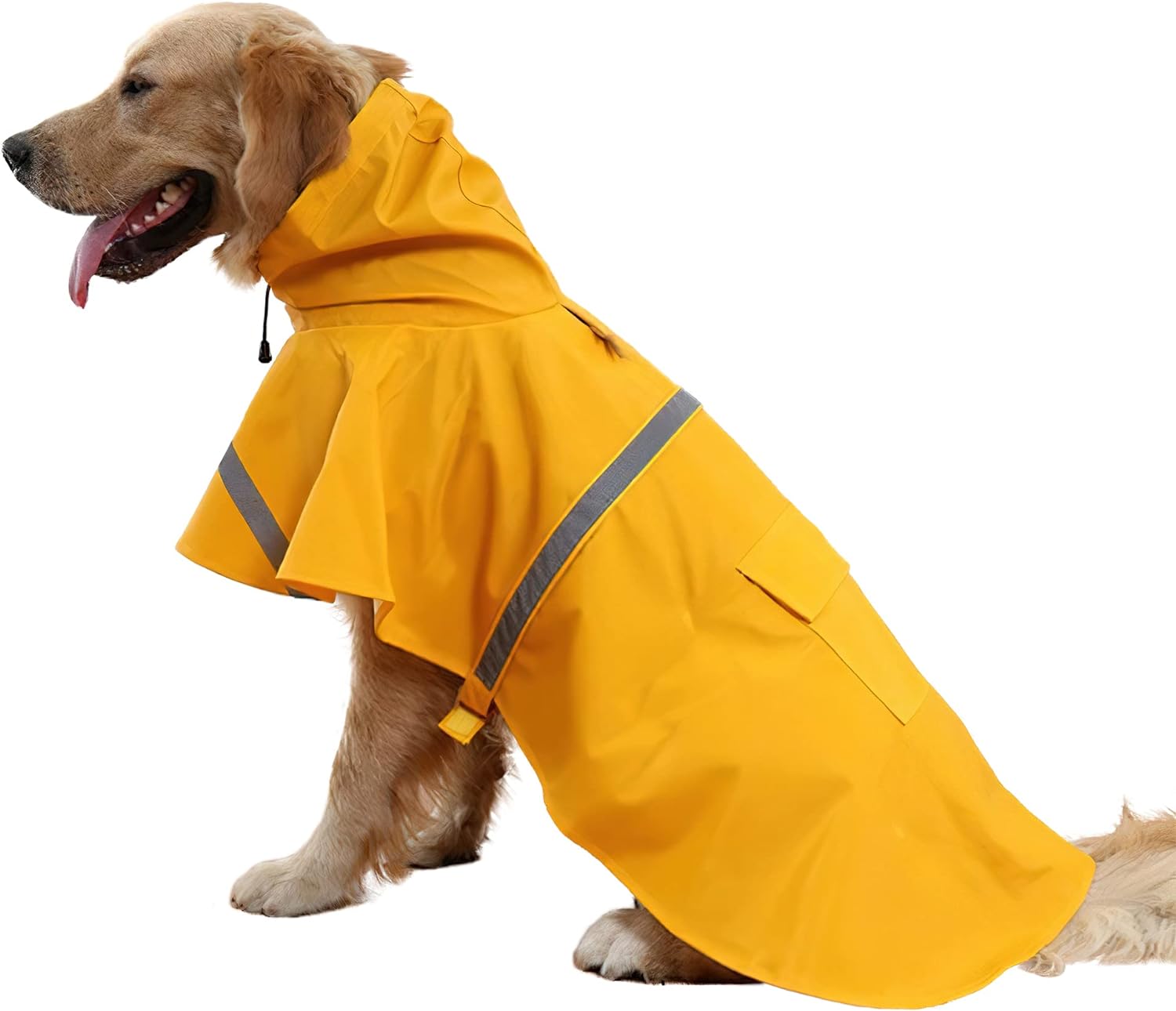
Cut for actual large dogs rather than being a medium coat with a bigger label, which is the commonest sizing failure in this category. The back length runs long enough to cover a retriever to the tail base and the chest strap adjusts over a genuinely wide range, so a deep-chested dog is not squeezed. The fabric is a lightweight coated nylon that packs down small enough to live in a coat pocket for the days the forecast is wrong.
Pros
- Genuinely sized for large breeds
- Wide chest adjustment for deep-chested dogs
- Packs down small
Cons
- Lightweight fabric is less abrasion resistant
- No insulation, so it is a rain layer only
Best visibility
Mile High Life Reflective Dog Raincoat
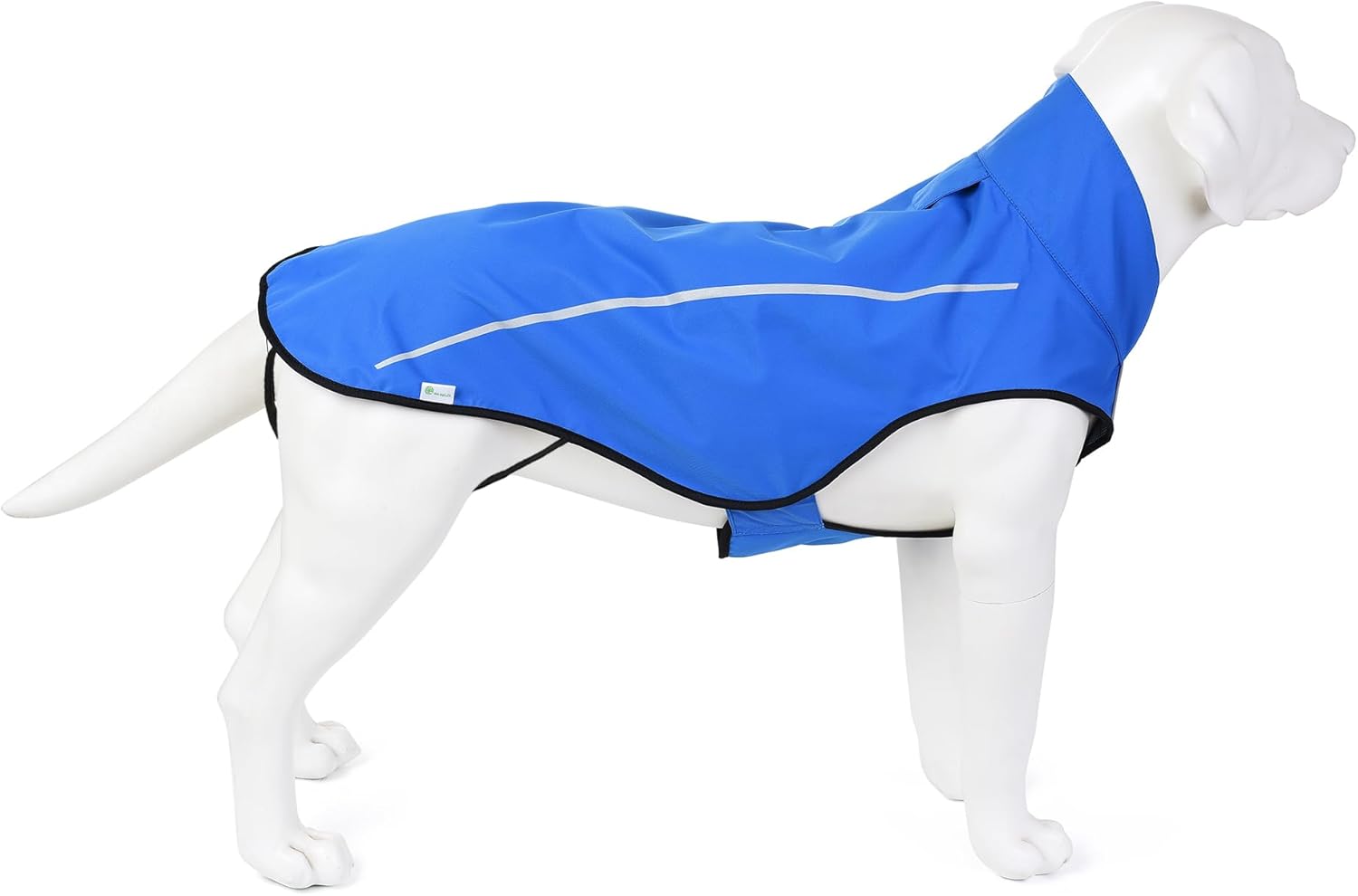
The pick for the months when rain and darkness arrive together, which is when a dog on a wet pavement is hardest to see. The reflective banding is wide and wraps the flanks rather than being a token strip along the spine, so the dog is visible from the side, which is the angle that matters at a junction. Waterproofing and cut are otherwise comparable to the HDE. The reflective material stiffens slightly in cold weather, and it is the part that wears first with repeated washing.
Pros
- Wide reflective banding visible from the side
- Adjustable fit through the chest and belly
- Good coverage for the price
Cons
- Reflective sections wear before the fabric does
- Slightly stiff in cold weather
Best for quick trips
KOOLTAIL Hooded Slicker Poncho
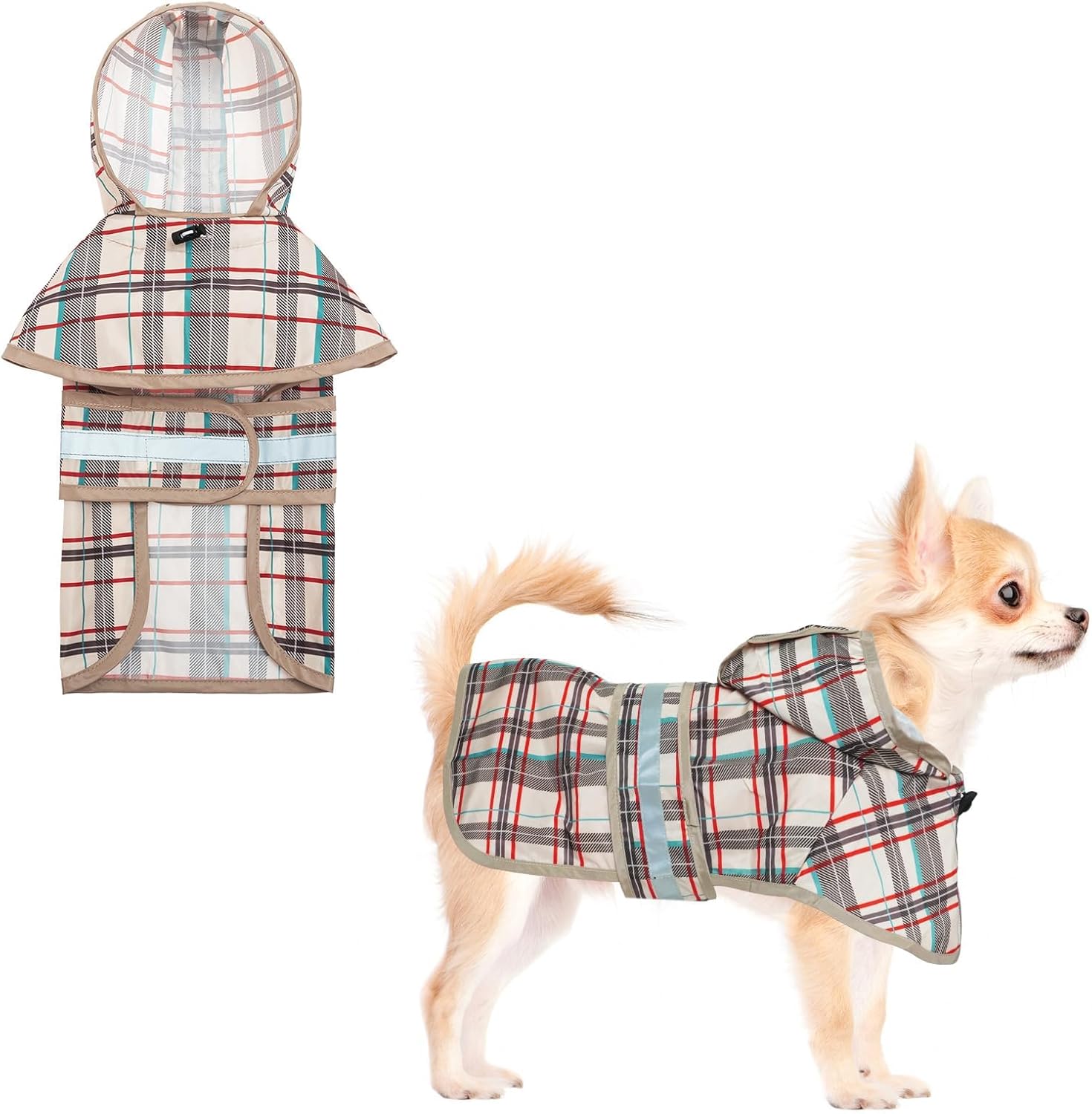
A poncho rather than a fitted coat, which makes it the fastest thing here to get on a wet dog that does not want to be dressed: it goes over the head and fastens once instead of threading legs through openings. For a five-minute garden trip in a downpour that is exactly right. The looser cut is also the limitation, since it flaps in wind and offers less coverage on a moving dog than a fitted coat, so it is a convenience buy rather than a walking coat.
Pros
- Fastest coat here to put on
- Simple to rinse and hang dry
- Very inexpensive
Cons
- Flaps in wind and rides up when running
- Lighter construction than the fitted coats
Best full coverage
Zip Up Dog Raincoat with Reflective Buttons
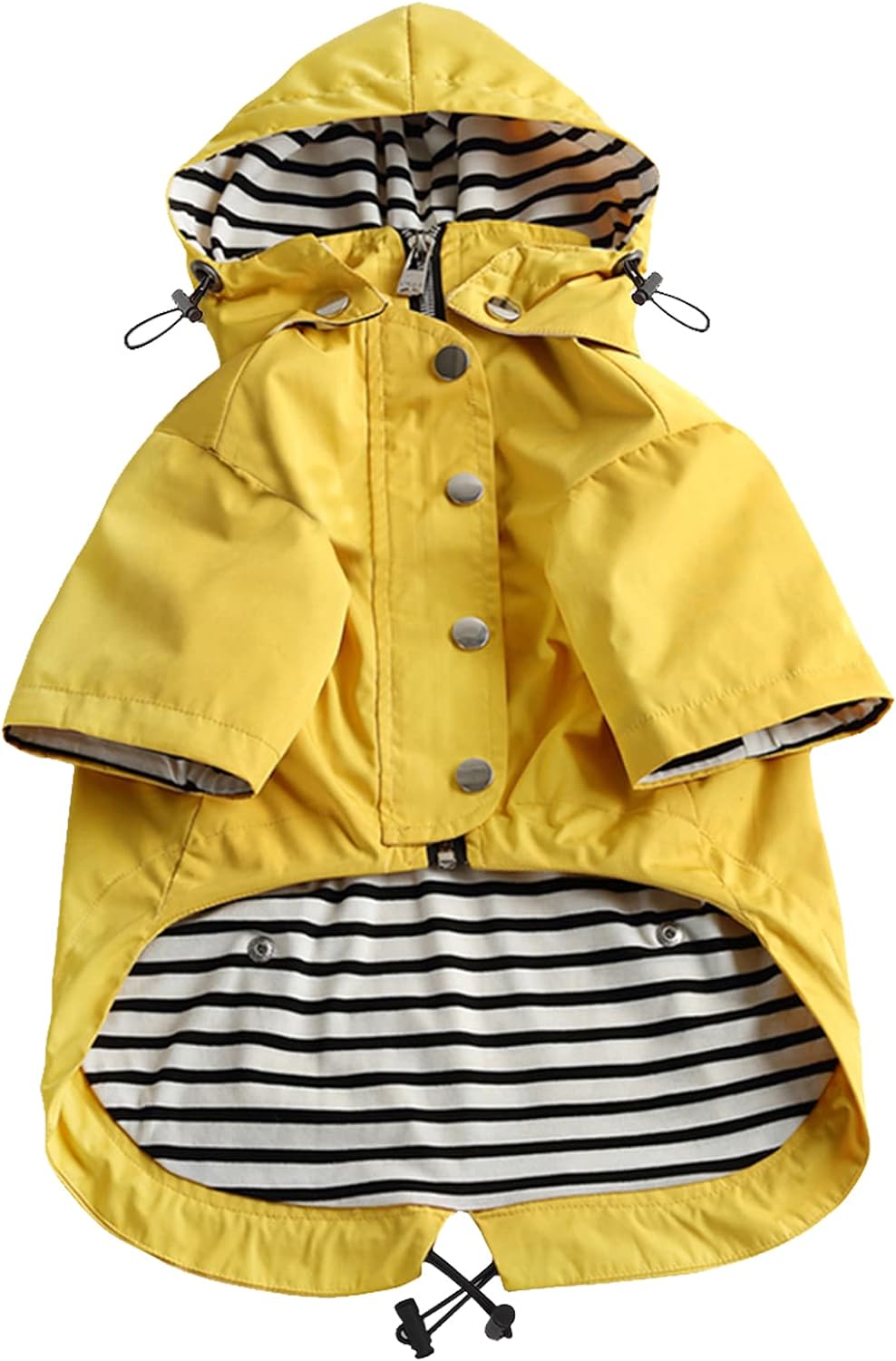
The most enclosing design here, wrapping further under the belly than the open-sided coats, which is the fix for a short-legged dog that arrives home soaked underneath even in a coat. If you own a dachshund, corgi or terrier that walks through puddles rather than around them, this is the shape to buy. The trade-off is that more coverage means more to put on and a warmer dog, so it is less suitable for a heavy-coated breed or for milder weather.
Pros
- Wraps further under the belly than open-sided coats
- Best option for short-legged breeds
- Reflective detailing included
Cons
- Runs warm on thick-coated dogs
- Takes longer to fit than a poncho
Also worth considering
Strong, well-reviewed products that just missed our ranked list - worth a look if the picks above aren't quite right for you.
- HDE Dog Raincoat, alternate colourways - The same coat as our top pick in different patterns, useful when your size is out of stock in one finish.
- HDE Dog Raincoat, turquoise - Another colourway of the same well-reviewed coat, listed separately by Amazon with its own stock.
- HDE Dog Raincoat, yellow - The brightest of the HDE finishes, worth choosing if winter visibility is the main reason you are buying.
Frequently asked questions
Do dogs actually need a raincoat?
Some do and most do not. A thick double coat sheds water and dries itself, so a labrador in a shower is fine. A thin-coated or small dog loses heat fast when wet, and a dog that is cold and miserable cuts the walk short. The other real case is practical rather than thermal: a coat keeps most of the mud off the dog, which means less of it on your floor.
How do I measure for one?
Back length is the number that matters: from the base of the neck, where a collar sits, to the base of the tail. Measure with the dog standing, not sitting. Chest girth is the second measurement and the one that decides whether a coat fastens at all on a barrel-chested dog. Where a chart puts you between sizes, size up if the coat has adjustable straps and down if it does not.
What is a leash hole for?
It lets you keep the harness on under the coat and pass the lead through, rather than clipping to the coat itself. Always clip to the harness. Coat fabric and its stitching are not load-bearing, and a lead attached to a coat will eventually tear it or come off entirely at the worst moment.
Waterproof or water resistant?
Waterproof means a coated or laminated fabric with sealed or taped seams. Water resistant means a treated surface that beads a shower and wets through in sustained rain. For a fifteen-minute walk the difference rarely matters; for an hour in real weather it is the whole product. If the listing does not mention seams, assume they are not sealed.
Will my dog tolerate it?
Often not at first. Put it on indoors for a few minutes with something good happening, several times, before the first wet walk. A dog that has a coat forced on in the rain associates the coat with the rain. Freezing, walking oddly or refusing to move are all normal first reactions and usually pass within a few sessions.