What Happens to Pet Gear in a Power Cut
Which automatic feeders, fountains and litter boxes stop when the power does, what resumes on its own, and the free preparation that beats buying a battery.
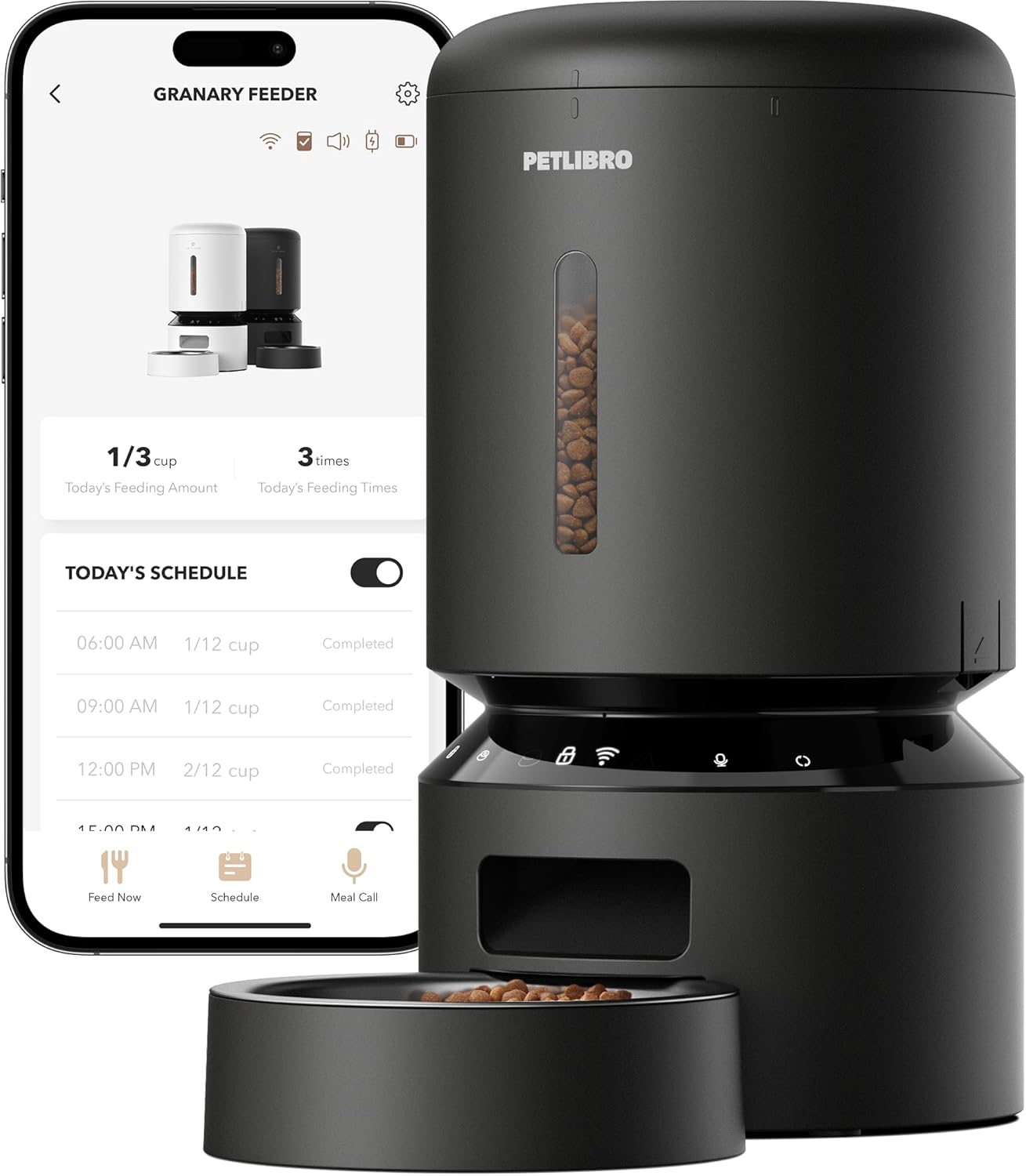
The gear that makes pet care easier is, almost by definition, the gear that needs power. A bowl does not fail in a storm. A wifi feeder, a fountain and a self-cleaning box all do, and they fail differently enough that it is worth knowing which of yours matters.
Rank them by consequence, not by cost
The feeder is the one that counts. Everything else on this list is an inconvenience; a missed meal for an animal on a fixed schedule is the only genuine welfare issue here, and it is worst for the households that rely on a feeder most, where nobody is home to notice. This is why the battery compartment on the back of a feeder is the most under-appreciated feature in the category, and why it is worth checking the specific listing even on a premium model: our Whisker Feeder-Robot review found that some versions mention a backup battery and some do not.
The fountain is mostly a behaviour problem. The pump stops, and you are left with a bowl of water that is perfectly drinkable. The catch is that some cats will not drink still water from a vessel they have only ever seen running, which is the whole reason many people bought the fountain. Our guide on why cats prefer running water covers that preference and why it is stronger in some cats than others.
The litter box is the one that surprises people. A powered box that stops mid-cycle can be unusable rather than merely dirty, and a cat that finds its box unusable will choose somewhere else and may keep choosing it afterwards. That habit outlasts the outage by a long way.
The preparation that costs nothing
Most of this is solved before it happens, and none of it needs buying.
Keep a normal bowl for each animal where you can find it in the dark. Know whether your feeder takes batteries, and keep live ones in it rather than in a drawer. Know whether your litter box resumes on its own or needs a reset, which is a thirty-second thing to look up now and an unpleasant thing to work out later. If you already own a battery-operated fountain, you have quietly solved the water half of this already, which is a better reason to buy one than it usually gets credit for.
Then put the food and water down before you need them, not after. An outage that arrives while you are out is the scenario the whole list is written for.
When backup power is actually worth it
For most households and most outages, it is not. A bowl and a scoop cover a few hours for nothing, and buying a battery to keep a fountain circulating is solving a problem you can solve with tap water.
It becomes a real question in three situations: you are away for long stretches and the feeder is genuinely doing the work, outages where you live last days rather than hours, or you are already sizing backup power for a fridge or a sump pump and want to know what the pet gear adds to the total. In that last case it is nearly a rounding error, but “nearly a rounding error” is a guess unless you do the arithmetic.
That arithmetic is not our field, so here is someone whose it is: watt-hours explained sets out the one unit every backup decision runs on, and their power station size calculator turns a list of what you want to keep running into a capacity figure. Work from the actual draw printed on your own devices rather than from a category average, because pet gear varies far more than its size suggests.
The line that is not about equipment
None of this replaces noticing. A pet that stops eating or drinking, or that starts avoiding its litter box, is a vet question rather than an equipment question, and an outage is a plausible enough explanation to delay someone asking it. If the behaviour continues once the power is back, the outage was not the cause.
Frequently asked questions
Will my automatic feeder still work without mains power?
Many have a battery compartment, and on most of those the batteries run the dispensing motor and the clock but not the wifi, camera or display. So the scheduled meals usually keep coming while the app goes dark, which is disconcerting but not the failure it looks like. Some models have no backup at all. Check your own listing for a battery slot and keep cells in it, because discovering the answer during an outage is the wrong time.
Is standing water in a fountain safe to drink?
For a short outage, yes. The pump moves and aerates water, it does not sterilise it, so what you have is an ordinary bowl of water that stops being fresh at an ordinary rate. The practical problem is behavioural rather than microbial: a cat that has learned to drink from a moving stream may ignore still water in the same bowl. Put a separate normal bowl down as well, in a different spot.
What happens to a self-cleaning litter box mid-cycle?
It depends on the model, and the honest answer is that you should know which yours does before you need to. Some resume or re-home the globe when power returns, some need a manual reset, and some stop with waste still in the drum. A box stuck mid-cycle is also a box the cat cannot use, which matters more than the mess, because a cat that finds its box unusable may pick somewhere else and keep using it after the power is back.
Do I need a battery for any of this?
Usually not. Pet gear is low-draw next to the appliances that justify backup power, and for a short outage a bowl of food and a bowl of water solve the whole problem for nothing. It becomes a real question if you are away from home for long stretches, if outages where you live run for days, or if you already want backup power for other reasons and are only asking what the pet gear adds to the total.