Cat Water Fountain Filters Explained (And What They Cost Per Year)
What the carbon, foam and resin layers in a cat fountain filter actually do, how often they really need changing, and the annual cost of each one.
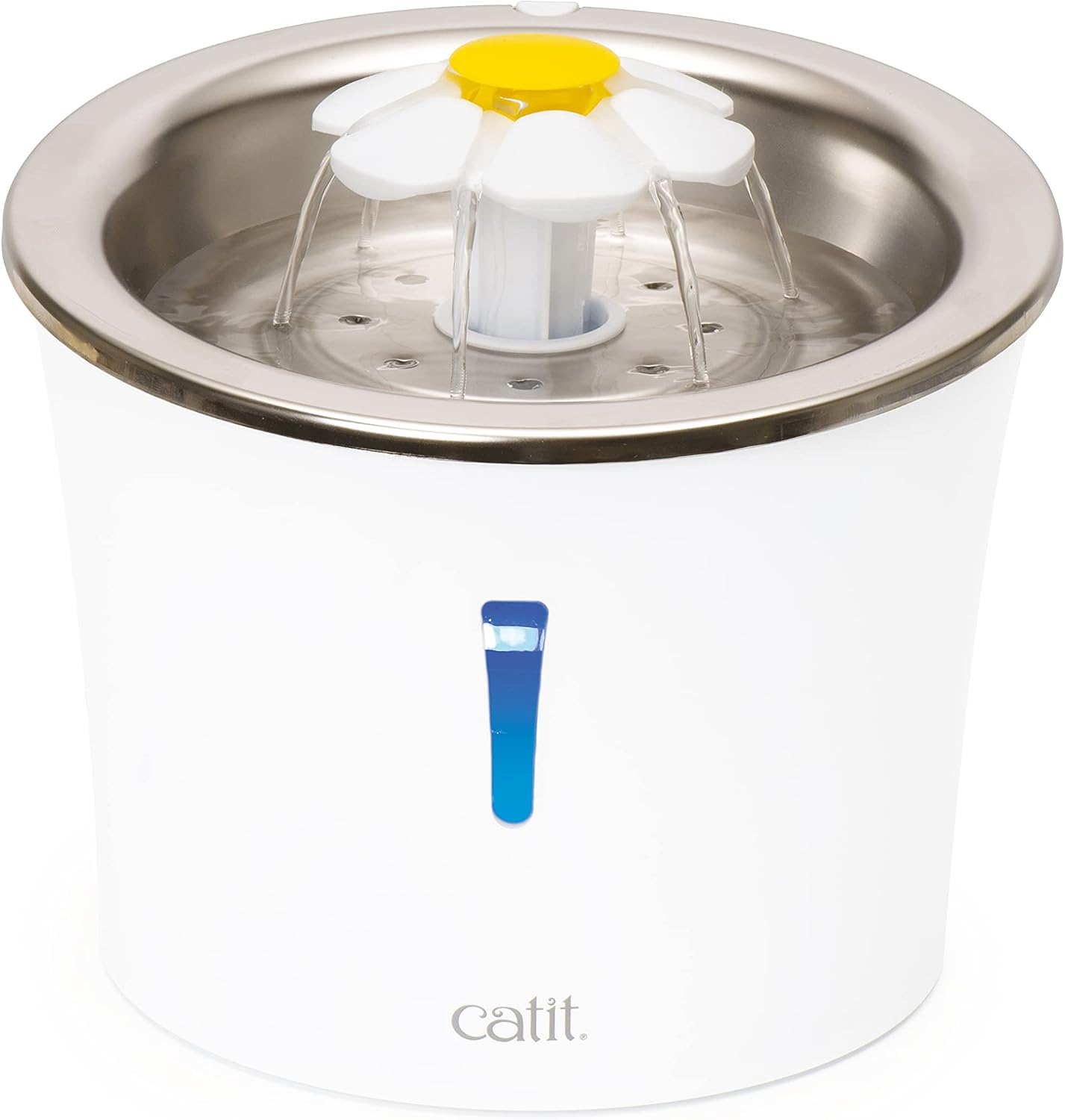
Filters are the part of a fountain nobody thinks about at purchase and everybody pays for afterwards. They are also the reason two fountains with the same sticker price can differ by a hundred dollars over three years.
What the layers actually do
Most fountain filters stack three materials, and each solves a different problem.
Foam or non-woven fabric catches hair, grit and litter dust. This layer is the one protecting your pump, and it is the reason running a fountain filterless is a false economy: the impeller is the expensive part, and hair wrapping its shaft is a common way to kill one.
Activated carbon adsorbs chlorine and the organic compounds that make tap water taste flat. This is the layer that changes drinking behaviour, because taste is a real factor for a species with a weak thirst drive.
Ion exchange resin softens water by swapping calcium and magnesium ions for sodium. In a hard water area this measurably slows the white scale that otherwise crusts the pump housing and the bowl.
A “triple action” filter is these three in one cartridge. It is not a more advanced technology than a plain carbon filter, just more layers in the same housing.
What they cost per year
This is the number to work out before you buy, not after. As a rough guide, budget 25 to 60 dollars a year per fountain for filters on the models we recommend, and considerably more for any system built around a proprietary consumable.
The arithmetic that matters is not the filter price but the interval multiplied by the price. A cheap filter needed fortnightly costs more than an expensive one needed monthly. Check both figures on the listing before you commit, because the fountain is a one-off and the filter is forever.
The same logic decides the litter category, where crystal trays are the running cost that dwarfs the machine. Our self cleaning litter box running costs guide does that version of the sum.
The part everyone skips
Changing the filter is not the maintenance that keeps a fountain alive. Cleaning the pump is.
Slime builds inside the impeller housing where you cannot see it, and that is what turns a quiet fountain into a rattling one months before its time. Pull the pump apart every fortnight, brush the impeller and its chamber with an old toothbrush, and reassemble. It takes under a minute and it is the single highest-value habit in fountain ownership.
A fountain that has gone slimy despite regular filter changes has almost always had its pump neglected, not its filter.
Which fountains are cheapest to live with
Proprietary versus generic is the fork. Fountains that accept common third-party filters let you shop around forever; ones with a bespoke cartridge do not.
Our best cat water fountains roundup factors annual filter cost into every value score rather than ranking on purchase price, and the Veken versus PETLIBRO comparison shows how much running cost can narrow a price gap that looks decisive on day one. The PETLIBRO Dockstream review covers the one design here whose pump is not the first thing to fail. Filter cost is also the strongest argument for a glazed bowl, so our best ceramic cat water fountains roundup notes which of them take generic cartridges and which lock you in.
If your cat is not using the fountain at all, the filter is not the problem. Our guide to why cats prefer running water covers placement, flow rate and the whisker issue that defeats more fountains than any component does.
Frequently asked questions
How often should I change the filter?
Every two to four weeks for most fountains, sooner with multiple cats or hard water. The honest signal is not the calendar but the water: if it tastes or smells flat, or the flow has dropped, the filter is saturated. Manufacturers err on the frequent side because filters are where the margin is, so treat their interval as a maximum rather than a rule, and judge by the water.
Can I run a fountain without a filter?
Mechanically yes, and the pump will be worse off for it. The foam layer is there to catch hair and grit before they reach the impeller, so removing it shortens pump life, which is the expensive part. If you want to cut costs, buy generic filters for a fountain that accepts them rather than running none.
Are generic filters as good as branded ones?
Usually, for the fountains that accept them. The three layers are commodity materials: activated carbon, ion exchange resin and non-woven fabric. Where generics fail is fit, because a filter that seats badly lets water bypass it entirely. Buy one pack of generics and check the seat before committing to a year's supply.
Does a filter make tap water safer?
It improves taste rather than safety. Activated carbon strips chlorine and the flat taste that comes with it, which is genuinely why some cats drink more from a filtered fountain. It is not a purifier and it does not make unsafe water safe. If your tap water is fine for you, it is fine for your cat, filter or no filter.