How To Trim Dog Nails Without Hitting the Quick
How to find the quick on pale and black nails, how much to take at a time, what to do in the first thirty seconds if you catch it, and how to fix overgrowth.
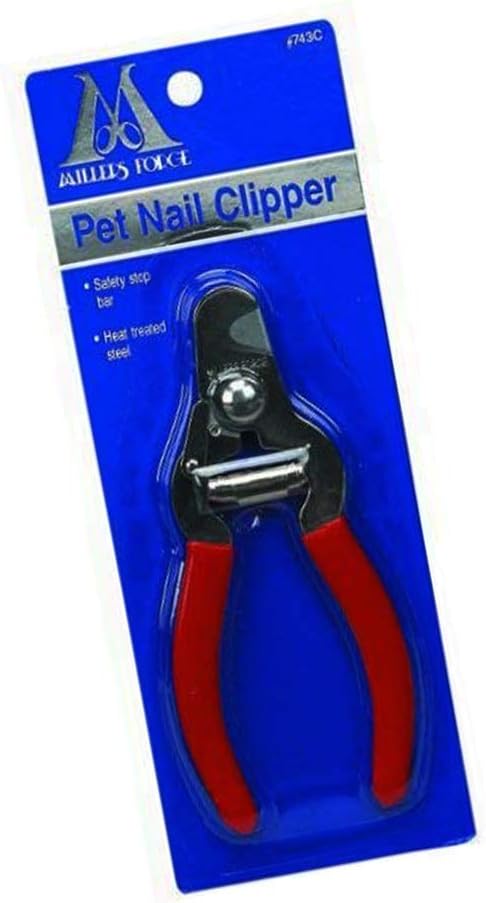
Catching the quick is the thing that ends home nail trimming for most people. It bleeds dramatically for something so small, it hurts, and a dog that experiences it once frequently refuses to offer a paw for months afterwards. Nearly all of it comes down to taking too much at a time.
What the quick is
The quick is the living core of the nail: a bundle of blood vessels and nerves running down the middle from the toe. The hard outer nail grows around it. Cut into it and you get bleeding and pain, which is why the goal is never “as short as possible” but “just past the quick”.
Critically, the quick grows with the nail. Keep nails short and it stays back. Let them grow long and it advances, which is why an overgrown nail cannot be fixed in one go.
Pale nails: look through the nail
On a white or clear nail you can see the quick as a pink line running down the centre. Leave two millimetres of clear nail beyond where the pink ends and cut there. That is the entire technique, and pale nails are genuinely easy.
Black nails: read the cut surface
You cannot see through a black nail, so you use the cut face as your gauge instead. Take thin slices from the tip, and after each one look at the surface you have exposed.
Far from the quick, that face is uniformly chalky and dry. As you get close, a small dark dot appears in the middle of it, sometimes looking slightly damp. That dot is the top of the quick seen end-on, and it means stop.
Cutting at a slight downward angle, following the natural curve of the nail, keeps you further from the quick than cutting straight across.
Technique that reduces the risk
Do it after a walk, when the dog is tired and its nails are slightly softened. Hold the paw from underneath rather than gripping it, so the dog can withdraw without a struggle turning into a fight.
Do two nails and stop, especially early on. A dog that gets two nails done and is then released learns that this is a minor event. A dog held down for all sixteen learns the opposite, and that lesson lasts years.
Do not forget the dew claws on the inside of the leg. They never touch the ground, so they never wear, and they are the ones that curl round into the pad.
Tooling helps, but technique matters more
A grinder gives you more chances to spot the quick because it removes a fraction of a millimetre at a time, which is why we recommend it for black nails specifically. A guarded clipper limits how much nail can enter the blades, which makes a beginner’s worst cut physically harder.
Our dog nail grinder versus clippers comparison covers which suits your dog, the best dog nail grinders roundup ranks the quiet models for dogs that are already wary, and the best dog nail clippers guide covers the guarded options.
Cats are a different job with different tools; our best cat nail clippers roundup covers those.
Handling tolerance is the thread running through all of this. A dog that is used to being towelled at the door is a dog that objects less to having its feet held, which is one reason we rate a decent drying towel or robe as grooming kit rather than laundry.
When it is a vet’s problem
A nail split up into the nail bed, bleeding that will not stop, a nail that has grown round into the pad, or a dog that is lame afterwards are all veterinary matters rather than grooming ones. So is a dog whose distress at having its feet handled is severe rather than reluctant; that is worth raising with a vet or a qualified behaviourist rather than pushing through. We review products and are not veterinarians.
Frequently asked questions
How do I find the quick on a black nail?
You work from the cut surface rather than looking through the nail. Take a thin slice off the tip, then look at the face you have exposed. It starts chalky and uniform. As you approach the quick a small dark dot appears in the centre of that pale face, sometimes with a faintly moist look. That dot is the leading edge and you stop there. Take less than you think you need; the nail can be shortened again next week.
How much should I take off at once?
On a routine trim, only the hook: the part of the nail that curves down past the pad. That is usually a couple of millimetres. Most owners who catch the quick did so trying to make the nail look short rather than trying to make it functional. A nail that no longer clicks on a hard floor is the right length.
What do I do if it bleeds?
Press styptic powder firmly into the nail end and hold it for about thirty seconds; cornflour works if that is all you have. Keep the dog quiet and check again after ten minutes. Bleeding that has not stopped after roughly twenty minutes, a nail split up into the bed, or obsessive licking the next day are reasons to call your vet. Have the powder out on the table before you start rather than in a cupboard upstairs.
Can I fix overgrown nails in one session?
No. On a long-neglected nail the quick has grown out with it, so it sits much further forward than normal and there is no way to reach a normal length without cutting into it. Take a small amount weekly and the quick recedes over several weeks, letting you shorten gradually. Anyone promising a one-session fix is wrong, and following that advice hurts the dog.